HOW THIS WAS MADE
I never wrote a prompt
I talked. Claude wrote the prompt. I attached the reference images it asked for, generated a 480p draft, watched it, and said what was wrong. That loop ran until the shot was right — then, and only then, I upscaled.
01
The brief
I started by describing the whole film out loud, in one go, before anything was generated.
“My main hero character, I want it to be an Englishman, a white Englishman. He should be around in his middle 40s, right? Young and very handsome. Look stylish and rich.”
“My main hero receives an envelope in the beginning. As soon as he opens it, he sees the details about it: should arrive in the full moon… and then we cut to some other people receiving it, like 3 other persons.”
“It's not a must we show the moonlight in the sky. I would even prefer if you keep raising his wristwatch, and then we see how the moonlight on the wristwatch is moving bit by bit.”
What I said, before anything existedThat last line is the whole film. The moon fills up on the dial, not in the sky. Everything after this was built to serve it.
“Before we begin anything, I would like you to give me a brief of the full dialogue, what is going to happen, at what point, and what is going to be shown, all the action. I want to be sure you understand the story, so I don't waste credit.”
The step most people skip02
Lock the cast
Two people ever appear in close focus. Each got a three-panel sheet on flat grey, even studio light, nothing in the background to leak into a shot.
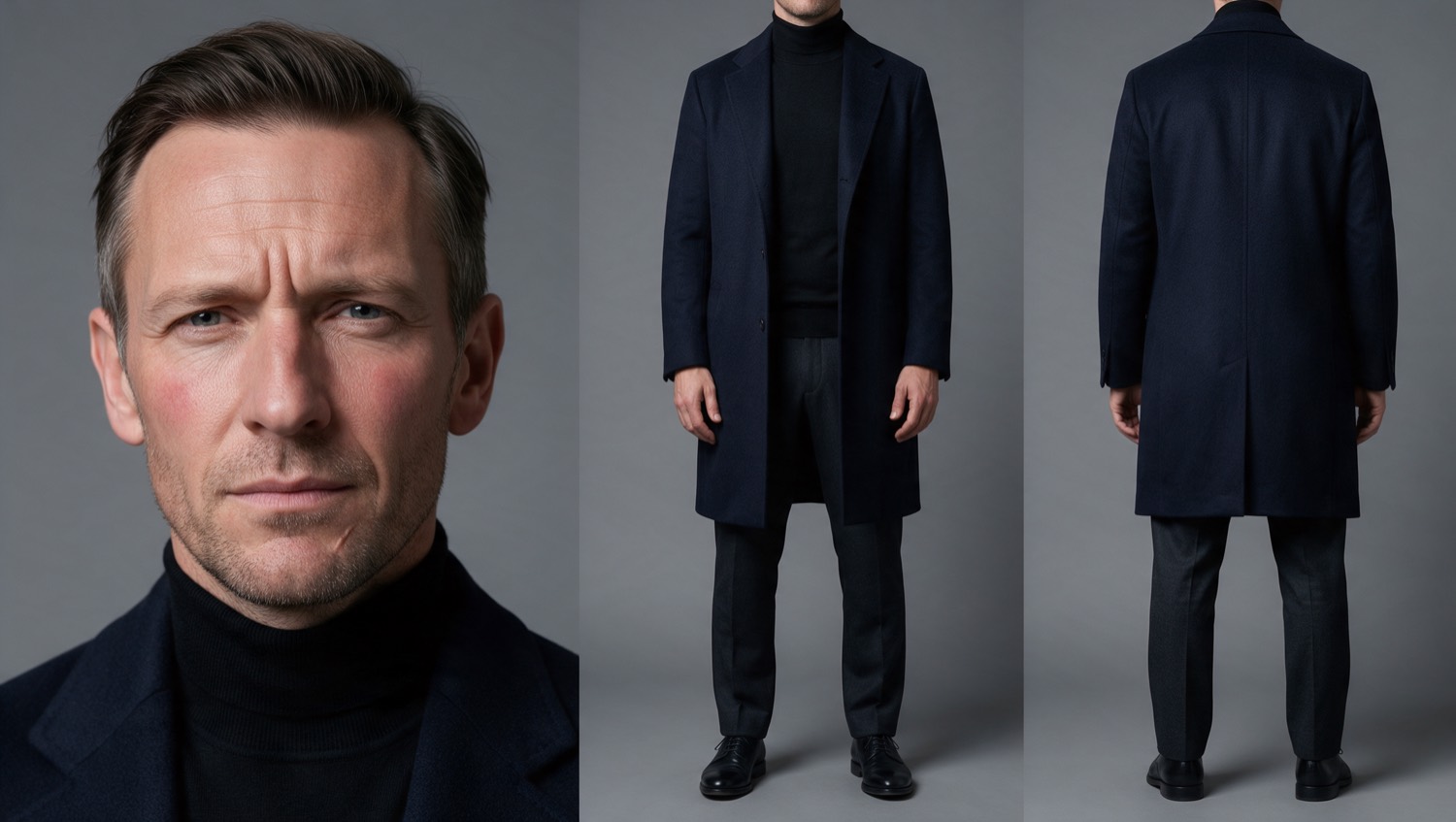
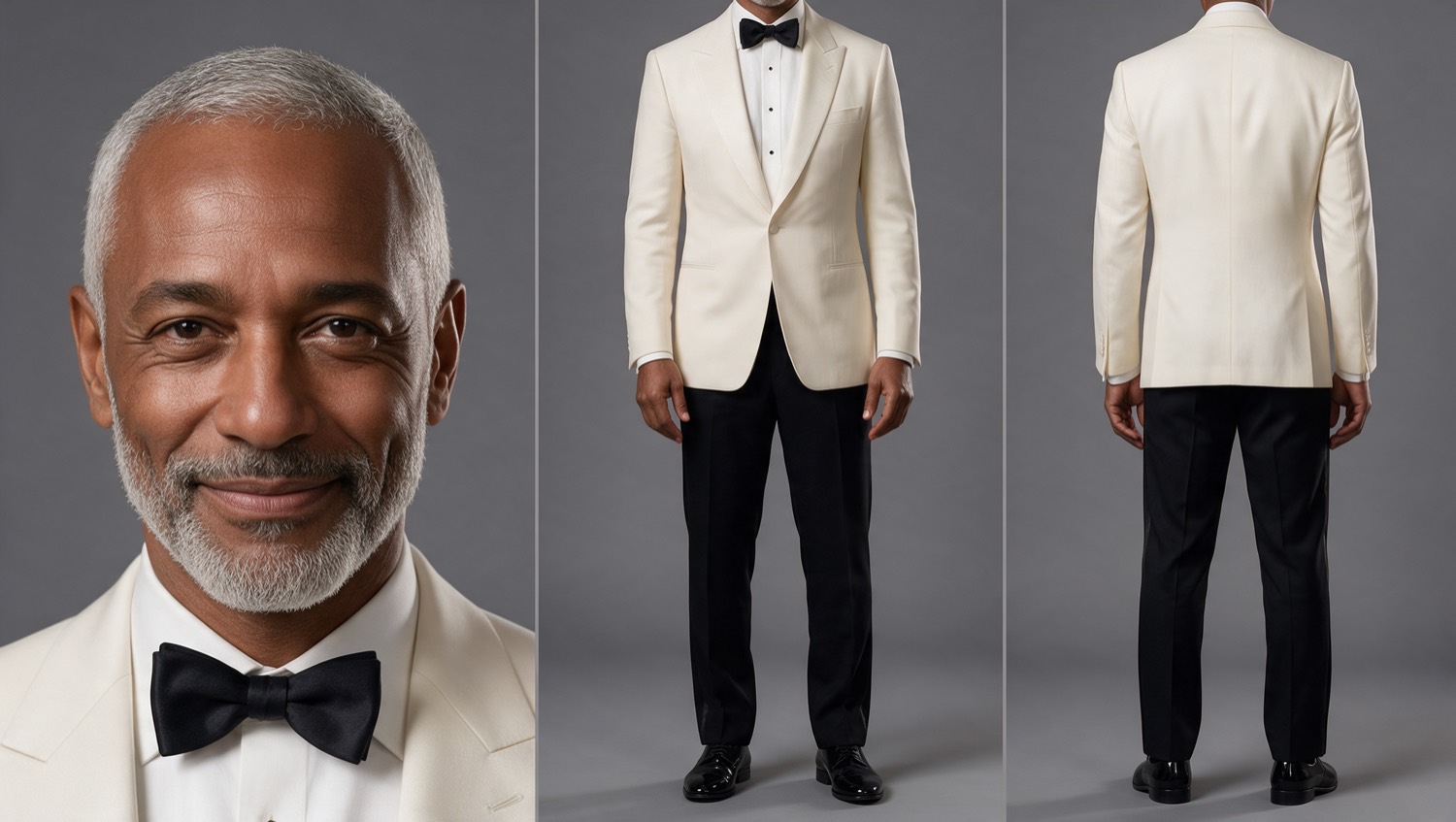
Every prompt carries the same instruction about these files: use only his face, hair, stubble and wardrobe from it, and do not use its flat grey studio background or its even studio lighting. Leave that out and the model paints the grey backdrop into a candlelit terrace.
“You don't need to generate him in any position or any place. You're supposed to tell me to attach the character sheet.”
Said after a roll came back with a drifting face03
Lock the product
This is a real watch, so the dial is not a design choice — it is a fact to be matched. The brand's own product photography went in as reference on every run where the watch could be seen at all.
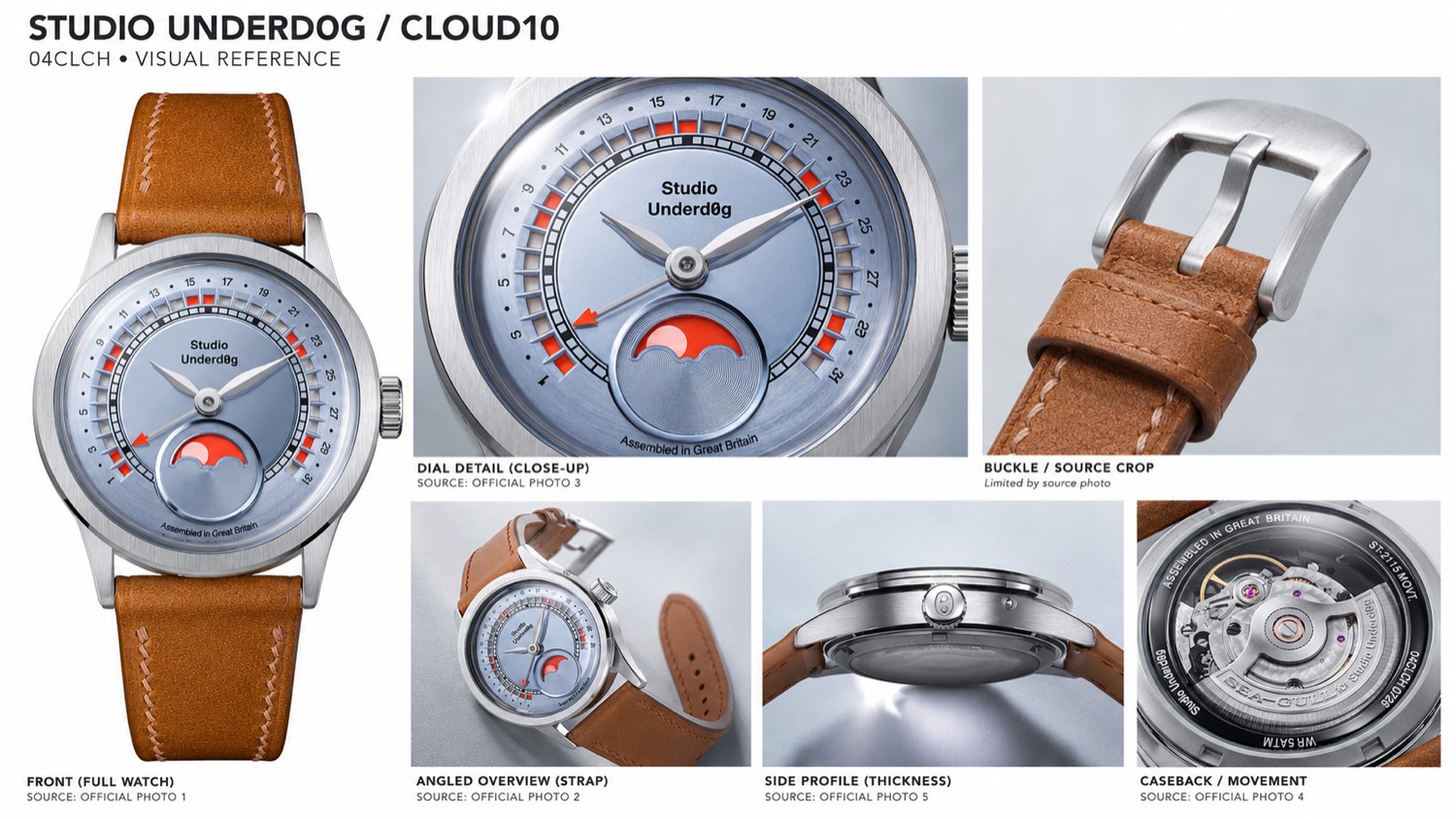
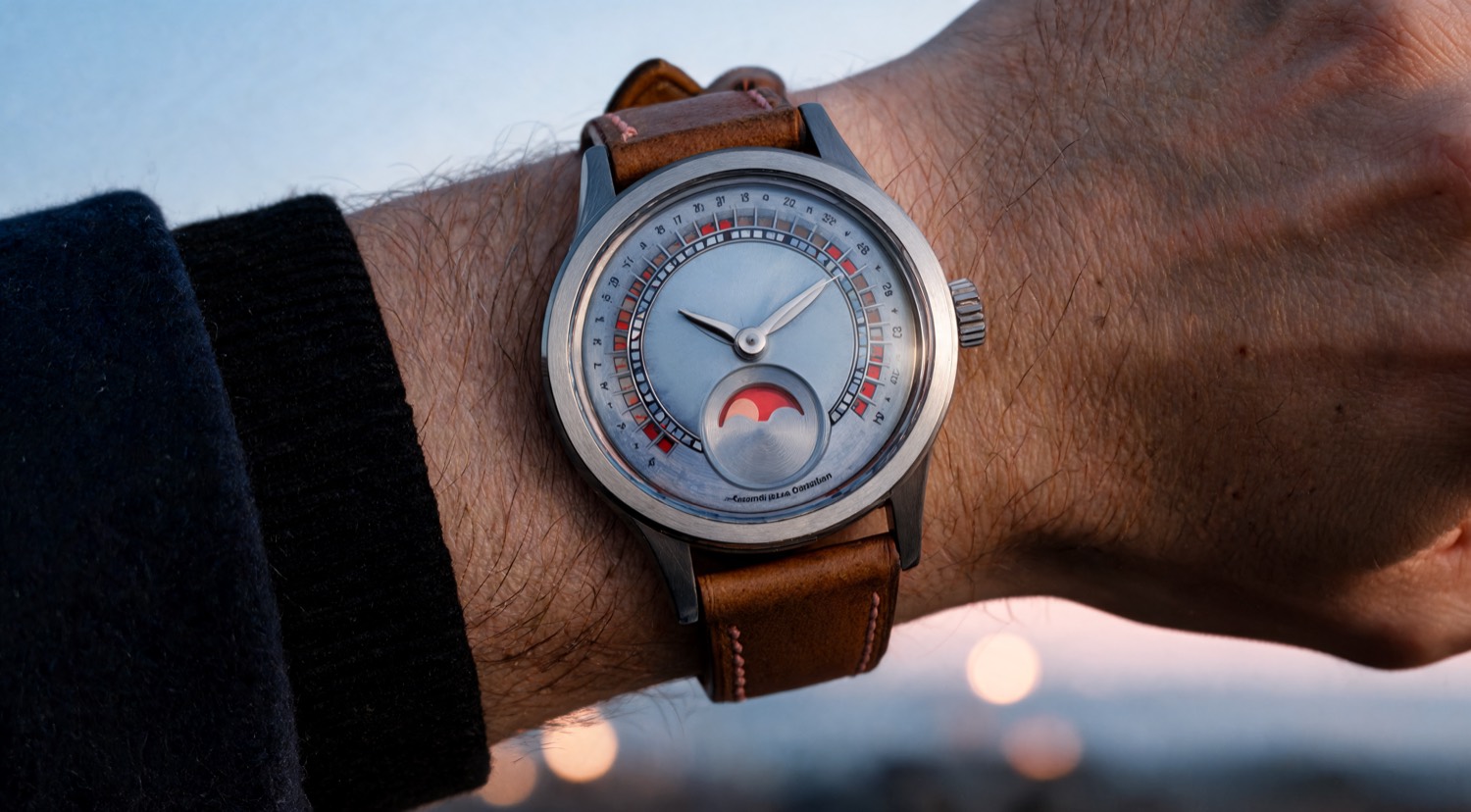
One hard limit, learned on the first roll: Seedance will not hold a readable dial. It garbles the small type and drifts the moonphase. So in every film prompt the watch stays small, angled away from the lens and out of focus — and the readable dial shots are made separately as stills. Section 09.
04
The study — the seal and the card
He cuts a wax seal, draws out a card, and it gives him no date. This is the one place in the film where words have to read on screen.
What I attached
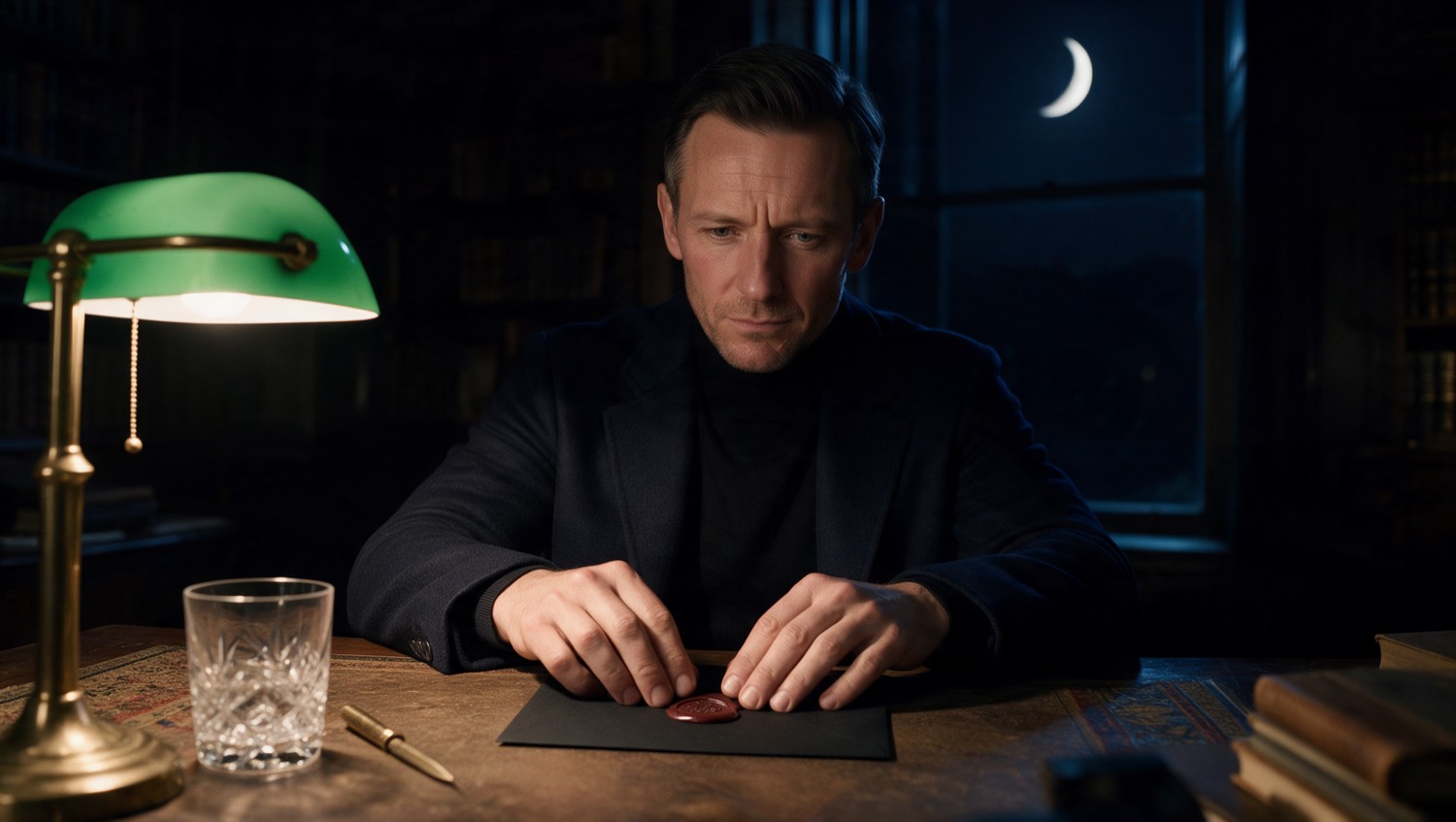
The prompt treats the plate as law: the desk, the green glass lamp, the tumbler, the brass opener, the books and the dark window all stay exactly where that picture puts them.
The prompt Claude wrote
[GOAL]
Cinematic spec advertisement, one man alone at night, 12 seconds. He breaks the wax seal on a black envelope, reads a card that gives him no date, looks out at a thin crescent moon, and checks his watch anyway. Five shots.

[CONTINUITY]
Subject: one man, 44, English, lean, six foot one. Dark brown hair cut short at the sides and swept back with grey at the temples, three-day stubble, pale grey-blue eyes, a pale scar on the right of his chin. He wears a midnight-navy wool overcoat open over a fine black merino roll-neck. He corresponds to <<<image_2>>> — use only his face, hair, stubble and wardrobe from it, and do not use its flat grey studio background or its even studio lighting. Exactly one person is in frame for the entire 12 seconds.
Scene: a dark panelled study in an old house at night, corresponding to <<<image_1>>>. The heavy wooden desk, the brass lamp with the green glass shade at the left, the crystal tumbler, the brass letter opener, the stacked leather-bound books at the right, the bookshelves falling into darkness behind, and the tall dark-framed window over his right shoulder all stay exactly where <<<image_1>>> puts them. Do not use <<<image_1>>> as a still frame to hold — it is the room, and the camera moves within it.
Props: the same black envelope with the same dark red wax seal stays under his hands from the first frame until he opens it. The same cream card comes out of that same envelope and stays in his right hand. The same watch stays on his left wrist throughout, hidden under his overcoat cuff until shot 5.
Sky: the thin waxing crescent moon in the window is the same crescent in every shot it appears in — the same narrow sliver, the same size, the same brightness, in the same place in the sky. It never grows, never brightens and never moves.

[SHOT 1 | 0-3s | medium, locked, slow push in]
Camera: medium shot, 47 degree field of view, eye level, positioned across the desk on the shadow side away from the lamp. Over the three seconds it pushes slowly forward about twenty centimetres toward his hands, smooth and even, with a 6 to 8 pixel handheld wander and no tremble.
Initial state: he sits square behind the desk, leaning slightly forward, both hands flat on the black envelope, both thumbs resting on the dark red wax seal, eyes down on his own hands. The crescent moon already hangs in the window over his right shoulder.
Action sequence: his thumbs press down and the brittle wax splits along a clean line, the two halves parting on the black paper. One slow blink. Nothing in his face changes.
End state: the seal is broken, his hands still on the envelope.
Transition: hard cut to shot 2.

[SHOT 2 | 3-5s | extreme close-up, high angle, locked, rack focus]
Camera: extreme close-up of the desk surface, 12 degree field of view, high angle looking down at the envelope, locked off. Focus starts on the torn edge of the black envelope in the near foreground and racks smoothly back to the face of the cream card as it emerges.
Initial state: the torn black envelope fills the frame, his fingers at its edge.
Action sequence: his right hand draws a heavy cream card out of the envelope and the card slides into focus, held flat, angled away from the lens so its surface catches the lamp.
End state: the card clear of the envelope, flat and lit, held in his fingers.
Transition: hard cut to shot 3.

[SHOT 3 | 5-8s | close-up, locked, slow tilt up]
Camera: close-up, 18 degree field of view, eye level, locked position with a slow continuous tilt upward across the three seconds. It starts framed on the card held at his chest with his chin at the top edge, and tilts up to settle on his eyes.
Initial state: the card in the lower frame, his jaw and stubble above it.
Action sequence: as the frame rises his eyes travel once across the card, left to right, and settle at the end of the line with one small pause, as though the words confirmed something rather than told him anything. Then his eyes lift off the card and go up and to his right.
End state: his eyes are off the card and looking past the lens toward the window.
Transition: hard cut to shot 4.

[SHOT 4 | 8-10s | medium wide over the shoulder, push in]
Camera: medium wide over his right shoulder, 47 degree field of view, slightly behind and above his shoulder line, pushing slowly forward past him toward the window across the two seconds so the window and the crescent grow a little in frame.
Initial state: his shoulder and the back of his head fill the left of frame, the tall window and the thin crescent moon on the right.
Action sequence: he has turned about fifteen degrees to look out. The camera continues past him toward the glass. The crescent sits high in the black sky, a narrow sliver, nowhere near full.
End state: the crescent clear in the window, his shoulder soft in the foreground.
Transition: hard cut to shot 5.

[SHOT 5 | 10-12s | close-up on his hands, locked, rack focus]
Camera: close-up, 18 degree field of view, locked off low across the desk, framing the space in front of his chest. Focus starts on the desk surface and racks forward onto his wrist as it enters frame.
Initial state: the empty lit space in front of his chest, the desk soft below.
Action sequence: his left hand rises into frame and turns over, and the heavy midnight-navy overcoat cuff slides back a few centimetres off the wrist, uncovering a brushed stainless steel watch on a tan leather strap with pale pink stitching, corresponding to <<<image_3>>> for the case shape, the steel finish, the onion crown and the strap. The watch face stays turned away from the lens and sits in shadow, small in frame and never sharp. His eyes drop toward it.
End state: his wrist held still, the watch in frame, his gaze down on it. Hold this for the last half second.
Transition: end of video.

[VISUAL STYLE]
Photoreal cinematic night interior. One warm tungsten source at 3000 kelvin from the brass lamp at the left, its pool the brightest thing in frame and falling away fast into rich black at the edges. A thin cool blue wash at 7000 kelvin through the window on the right, enough to shape his jaw and shoulder on that side. Deep contrast, most of every frame in shadow, blacks that still hold detail. Medium format look, shallow depth of field, fine organic film grain. The grade stays identical across all five shots.

[CAMERA AND PERFORMANCE]
Cuts happen only at the four stated points; the camera does not cut on its own. Every camera move is slow, smooth and even, with no sudden acceleration, no roll and no whip.
The entire performance lives above the mouth. His lips stay closed and level for all 12 seconds. When the wax cracks, one slow blink and nothing else. When he reads, the only movement is the eyes tracking and a single settling pause. When he looks at the moon his brow stays smooth — he is measuring it, not wondering at it. When he turns his wrist over he does it in one unhurried movement without leaning in, the way a man checks a watch he already trusts. Skin at pore level, visible stubble texture, a faint lamp catch-light in the near eye, slow visible breathing in the chest and shoulders.

[AUDIO]
<a dry crack as brittle wax splits under thumb pressure>
<heavy cotton card sliding against paper>
<a slow clock ticking somewhere else in the house>
<a low wind outside the window glass>
<the soft creak of a leather chair as he shifts>

[EXCLUSIONS]
No music of any kind: no piano, no strings, no score, no swell, no riser, no sting. Ambience and effects only.
No speech, no voiceover, no humming, no breathing performed as sound design.
No readable writing anywhere in frame: the card's surface stays too oblique and too soft to read, and the envelope carries no address.
The watch dial never faces the lens and never comes into sharp focus.
No second person, no reflection of another person in the window or the tumbler.

[MAINTAIN CONSISTENCY]
One man, alone, across all five shots. The same face, the same grey at the temples, the same stubble, the same midnight-navy overcoat over the same black roll-neck. The same desk, lamp, tumbler, letter opener and books in the same positions. The same window on his right and the same thin crescent moon in it, unchanged in size, shape, brightness and position every time it appears. The watch stays on his left wrist the whole time and is uncovered only in shot 5.
Then the card problem
“When they hold the paper, are we going to show them reading the text on the paper? If so, I think it's best we generate an image of the card showing the text already.”
Me, before generating the second actSeedance garbles letterpress every time. The fix was not a better video prompt — it was to take a frame of the blank card and generate the printed version as a still, then feed that back in as a reference and reshoot the opening.
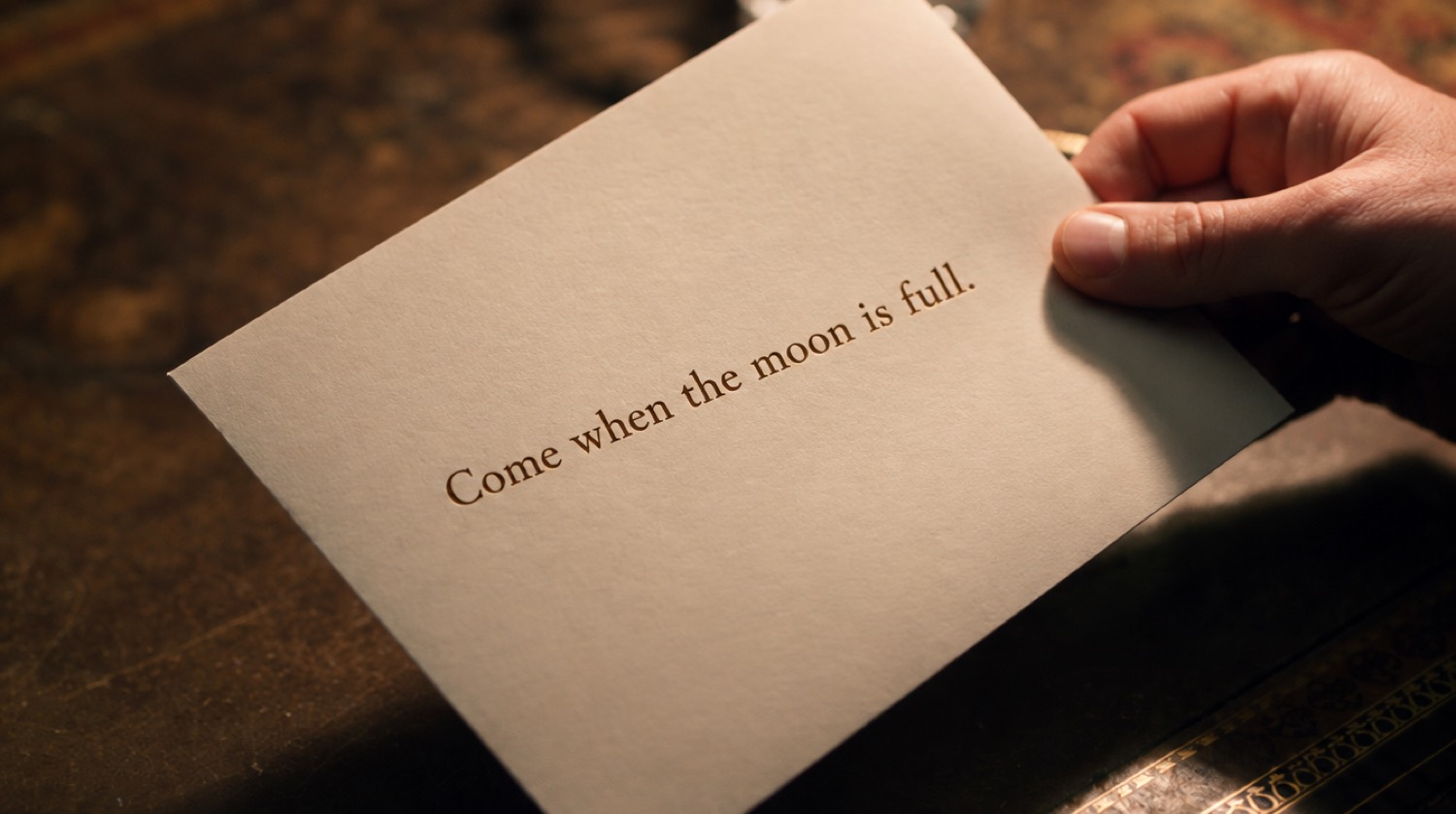
Recreate the reference image exactly, with one change: the card is no longer blank. It now carries a single printed line.

Keep everything else identical to the reference. The same warm cream card stock with its faint tooth, the same size and the same angle lying across the dark wood desk, the same hand holding its right edge with the same fingers and the same skin, the same soft warm lamplight falling from the upper left, the same shadow under the card, the same dark out-of-focus desk, the same dark green ledger underneath, the same shallow depth of field, the same grain.

Printed on the face of the card, one line only:

Come when the moon is full.

How the line must look. A classical serif with real thick and thin strokes, letterpress in feel, like Garamond or Caslon. Dark warm brown ink, never pure black, the ink slightly soft at the edges where it has sunk into the paper. Small, occupying a little over half the card's width and no more. Letter-spaced a touch wider than normal. Set as one unbroken line with no line break. It sits in the middle third of the card with clear empty paper above and below it, centred left to right on the card.

The line is printed on the card, so it lies on the card's own plane and runs parallel with the card's long edges, tilting with the card exactly as the card tilts. It is ink on paper caught in the same lamplight as the paper, slightly dimmer where the card falls into shadow at its right edge, with the paper's tooth faintly visible through the strokes.

No date, no address, no name, no signature, no crest, no border, no ornament, no second line.

Negative: a second line of text, a date, a name, an address, a border, a monogram, a crest, flourishes, a drop cap, a script or handwritten face, a sans-serif face, pure black ink, large type, type filling the card, type that is level with the frame instead of with the card, type floating above the card like a caption, a drop shadow under the letters, glowing text, a watermark, a different card, a different hand, a different background, a blank card.
The reshot opening
With the card in hand, the opening was generated again — this time with the brass opener, and the card readable at the end of the shot. Four references: the study plate, the Guest sheet, the product sheet, and the card.
A dark study at night. Two shots in five seconds, joined by one hard cut.

SET AND REFERENCES
<<<image_1>>> is the start frame and the master for the set: the desk, the green glass
lamp burning at frame left, the black envelope with its dark red wax seal, the slim
brass letter opener lying on the desk to his left, the cut-glass tumbler, the books,
the dark window behind. Every one of those stays exactly where <<<image_1>>> puts it for
the whole five seconds.
<<<image_2>>> is the master for the man's face and hair. His face is that face in both
shots. Take his face from it and not his eye line: his eyes stay down on the desk.
There is exactly one man in frame.
<<<image_3>>> is the master for the watch on his left wrist: a brushed steel case, a
fluted onion crown at three o'clock, a tan leather strap with pale pink stitching.
The watch carries an hour hand and a minute hand, and those two hands are the only
hands on it.
<<<image_4>>> is the master for the card. The words printed on the card are exactly those,
in that typeface, that brown ink, that size and that position on the card, and that
printed line is the only thing on the card.

SHOT 1 — 0.0s to 2.6s
Camera: a medium shot at a 47 degree field of view, placed exactly where <<<image_1>>>
places it, square onto the desk. This framing is required and the camera holds it
for the whole shot.
Action: he reaches left, takes up the brass letter opener, brings it across to the
envelope, slips its point under the edge of the red wax seal and lifts. The wax
splits into two pieces that stay on the envelope. He lays the opener down on the
desk. Four movements in two and a half seconds.
Acting: a man who already knows this letter matters. He works with his hands only,
his jaw set, his eyes down on the wax the entire time, one small breath out as it
gives.

HARD CUT.

SHOT 2 — 2.6s to 5.0s
Camera: a close macro shot at a 20 degree field of view, high over the desk looking
down at the envelope's dark mouth lying across the lower frame, the lamplight raking
in from the upper left. This framing is required and the camera holds it for the
whole shot. His face is outside this frame.
Action: his thumb and forefinger draw the cream card up and out of the black
envelope. The card rises clear of the envelope's edge, and for the final full second
it is held still, flat to the light and fully legible, reading exactly as <<<image_4>>>
reads. The letter opener is already down on the desk and out of his hand.

POSITIVE LOCKS
The seal is cut with the brass opener and stays cut from the moment it gives.
The lamp glow holds steady, fine dust turns in the lamp beam, his breathing lifts
his forearm a few millimetres, the window beyond stays dark and still.
This is live footage of a real subject, not a still image.
The printed letters hold their exact shape and position on the card, every frame.
Exactly one envelope, one card and one letter opener, in every frame.

AUDIO
All sound in this film is location sound recorded on the night, diegetic only: the
small crack of wax splitting, brass set down on wood, card sliding against paper,
faint room tone. There is no score.
05
Four cities, one night
Four people, four places, three spoken lines and one silence. Twelve seconds, four hard cuts, one roll, four references — one per shot, in order.
What I attached
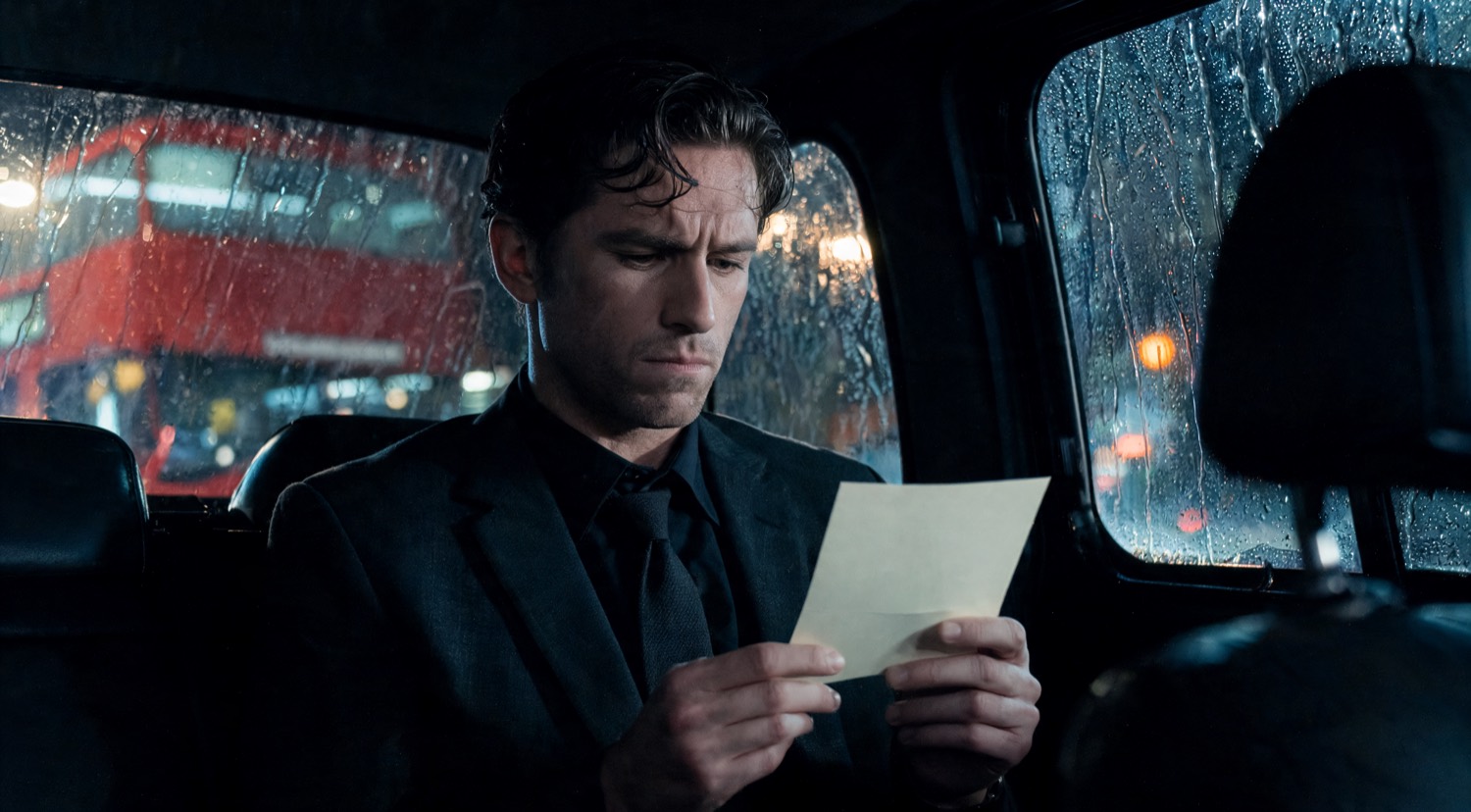
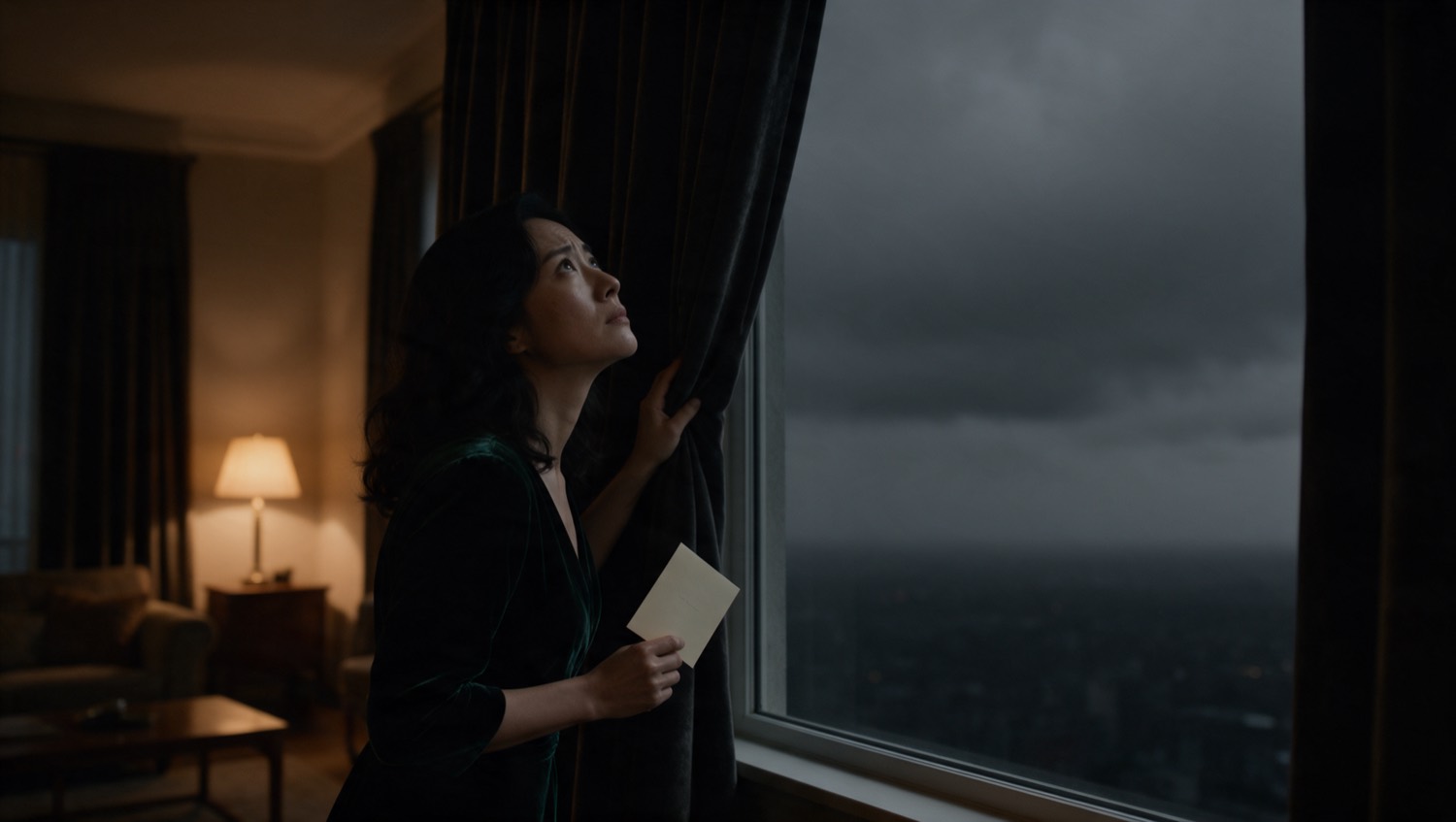
The prompt Claude wrote
[GOAL]
Cinematic spec advertisement, 12 seconds, four hard cuts. Four different people in four different cities on the same night. Each has just finished reading the same invitation and none of them can work out when they are supposed to arrive. Four shots, one per person, 3 seconds each. Three of them speak one short line; the fourth says nothing.

[CONTINUITY]
Four separate people in four separate places. Each shot contains exactly one person and that person appears in no other shot.
The card: each of them is holding the same plain cream invitation card, already read, held low and turned away so that its printed face is never visible to the camera in any shot. The card is never the subject. The camera is on faces.
Time: every shot is night or late dusk. The cities are different, the hour is the same.
Dialogue language: English. Each line is spoken quietly, almost to themselves, at conversational volume — nobody raises their voice and nobody performs.

[CHARACTERS AND PLACES]
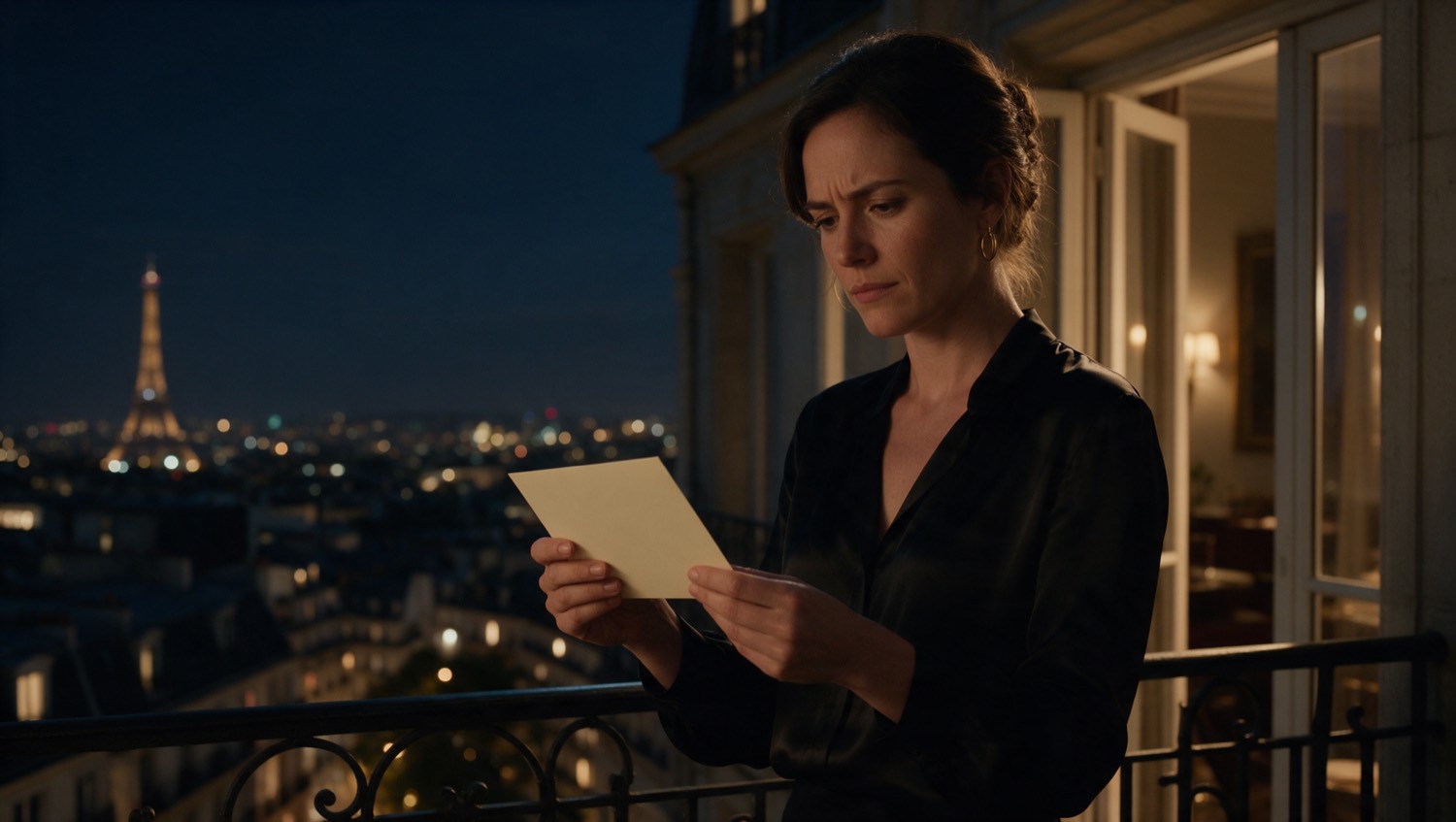
Shot 1 corresponds to <<<image_1>>> — a Parisian woman in her early thirties on a Haussmann balcony at night, dark hair pinned up, fine gold hoop earrings, black satin blouse, the lit city and the Eiffel Tower soft and distant behind her, warm lamplight from the open windows at her side. Use her appearance, her wardrobe and her balcony exactly. She appears only in shot 1. Her voice is light and French-accented English, quiet and puzzled.
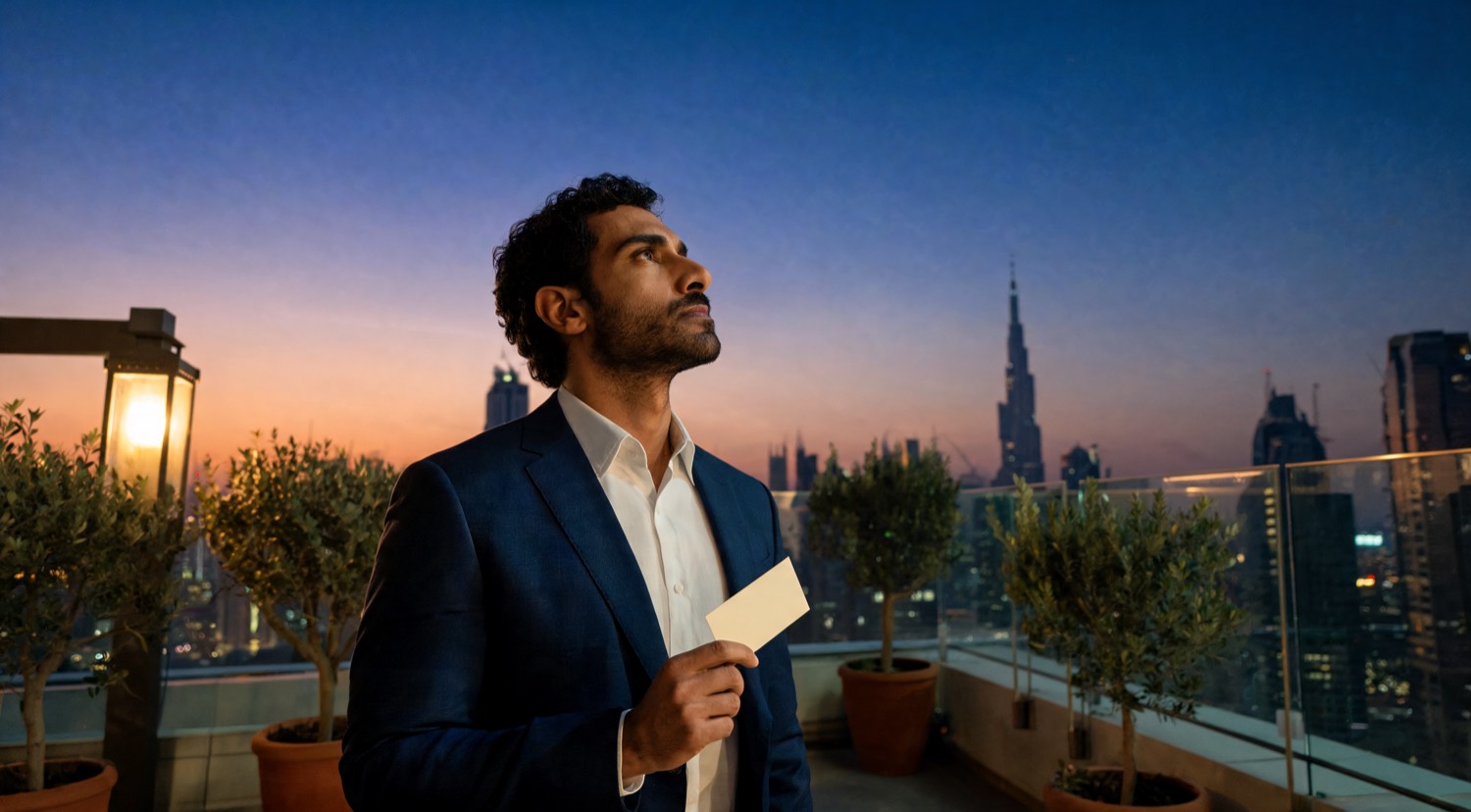
Shot 2 corresponds to <<<image_2>>> — a man in his mid-thirties on a high Dubai rooftop terrace at dusk, olive skin, dark curly hair, a short trimmed beard, a navy suit with the collar open and no tie, potted olive trees and tall towers behind him. Use his appearance, his wardrobe and his rooftop exactly. He appears only in shot 2. His voice is a warm, even, lightly accented English baritone.
Shot 3 corresponds to <<<image_3>>> — a man in his mid-thirties in the back of a black London taxi in heavy rain, light skin, dark wavy hair pushed back, a dark charcoal suit and dark tie, water streaming down the window and a red double-decker bus blurred beyond it. Use his appearance, his wardrobe and the taxi interior exactly. He appears only in shot 3. His voice is flat London English, dry and tired.
Shot 4 corresponds to <<<image_4>>> — an East Asian woman in her early thirties at a tall window inside a warm panelled room, dark wavy hair loose, a dark green velvet evening dress, a heavy velvet curtain held back in one hand, one warm table lamp behind her, and beyond the glass a sky of unbroken flat charcoal cloud. Use her appearance, her wardrobe, her room and the window exactly as the reference has them, including the glass in the window frame. She appears only in shot 4 and she does not speak.

[SHOT 1 | 0-3s | Paris | medium, slow push in and slight tilt up]
Camera: medium shot, 47 degree field of view, eye level, camera on the shadow side. Across the three seconds it pushes slowly forward about fifteen centimetres while tilting very slightly upward, so the frame settles on her face and the card leaves the bottom of the frame.
Initial state: she stands at the balcony rail, the cream card held at chest height, her eyes finishing the last line of it.
Action sequence: her eyes reach the end and stop. She lowers the card down out of the bottom of the frame in one easy movement and lifts her gaze out over the rooftops, brow drawing very slightly together. Then she says, quietly, almost to herself: {When is it full?}
End state: her face filling the frame, her eyes on the city, her mouth closing after the line.
Transition: hard cut to shot 2.

[SHOT 2 | 3-6s | Dubai | medium, slow push in]
Camera: medium shot, 47 degree field of view, chest level, camera on the shadow side, pushing slowly forward about fifteen centimetres across the three seconds. The camera stays on him and does not travel up into the sky.
Initial state: he stands on the rooftop, chin already lifted, eyes already searching the darkening sky, the card held low at his side and turned away.
Action sequence: he holds the search a moment longer and finds nothing. His chin lowers and his eyes come down and off to one side, and he says, flat and unimpressed: {There's no date on this.}
End state: his face three-quarters to camera, eyes down, mouth closing.
Transition: hard cut to shot 3.

[SHOT 3 | 6-9s | London | medium close, locked, tiny push at the end]
Camera: medium close shot, 29 degree field of view, eye level, from the opposite seat. Locked off for the first two seconds, with the rain on the glass supplying all the motion, then the smallest push forward across the last second.
Initial state: he sits in the back of the taxi looking down into his lap where the card is, out of frame below.
Action sequence: he lifts his eyes off his lap and over to the streaming window beside him, and the wet street light moves across his face. He says, dry and tired: {Full moon. That's all it says.}
End state: his eyes on the rain-covered glass, jaw set, mouth closing.
Transition: hard cut to shot 4.

[SHOT 4 | 9-12s | the curtain | medium, slow push in on her]
Camera: medium shot, 47 degree field of view, eye level, three-quarters onto her, pushing slowly forward about ten centimetres across the three seconds, staying on her the whole time. The window and the sky stay behind her, soft and out of focus, and the camera never travels toward the glass.
Initial state: she stands at the tall window holding the heavy velvet curtain back with one hand, chin lifted, eyes scanning the sky through the glass, the card held low at her side.
Action sequence: her eyes travel once across the sky and find nothing in it. Her chin comes down. She releases the curtain and it swings heavily back across the window and across the frame, closing the light out. She does not speak at any point.
End state: the curtain fallen closed, the room darker, her face turning away.
Transition: end of video.

[VISUAL STYLE]
Photoreal cinematic night. Each city keeps its own light — warm tungsten lamplight at 3200 kelvin on the Paris balcony, cool blue dusk with warm lantern fill at 4000 kelvin on the Dubai rooftop, cold wet street light at 5600 kelvin through the taxi glass, one warm table lamp at 3000 kelvin in the curtain room. Deep contrast throughout, rich blacks that hold detail, shallow depth of field, medium format look, fine organic film grain. The four shots are graded as one film: the same contrast, the same black level, the same grain.

[CAMERA AND PERFORMANCE]
Cuts happen only at the three stated points; the camera does not cut on its own. All four moves are slow, smooth and even, with no sudden acceleration, no roll and no whip. Every move ends on a face.
The three who speak each say one short line, quietly and late in their shot, with the mouth closed before and after it. The lines are thought aloud, not announced. Between the lines the performances live in the eyes and the brow: a scan, a slight tightening, a settling. Each of them is working on a problem and getting nowhere, and none of them is distressed about it. Skin at pore level, catch-lights in the eyes, visible natural breathing. The fourth woman's mouth stays closed for her entire three seconds.

[AUDIO]
<distant Paris street noise and a quiet balcony at night>
{When is it full?}
<high wind moving across a Dubai rooftop and faint traffic far below>
{There's no date on this.}
<heavy rain drumming on a taxi roof and running down glass, with a diesel engine idling>
{Full moon. That's all it says.}
<a heavy velvet curtain dragging and then swinging closed on its rail, then a very quiet room>
The ambience changes completely and instantly at every cut, with no sound carrying across from one city to the next.

[EXCLUSIONS]
No music of any kind: no piano, no strings, no score, no swell, no riser, no sting, no melodic or harmonic instrument. Ambience, dialogue and physical sound effects only.
No narrator and no voiceover: the only voices are the three people speaking on camera.
The fourth woman stays silent — no line, no whisper, no sigh, no breath performed as sound.
The printed face of the card is never visible to the camera in any shot, and there is no readable writing, lettering or numbering anywhere in frame.
The window in the fourth shot keeps its glass and its frame exactly as the reference has them.
No moon and no stars anywhere in any of the four shots.
No watch, bracelet or ring on any of the four people.
Each shot contains exactly one person, with nobody else in frame and no taxi driver visible.
No clock ticking and no watch ticking.

[MAINTAIN CONSISTENCY]
Four different people, four different cities, one in each shot, none of them appearing twice. Night or late dusk in all four. Every camera move ends on a face. The same grade, the same contrast and the same grain across all four shots.What came back
“Everything landed correctly. Just two things I noticed… First off, their accent. It's no different. It's like all of them are using UK accents. I was expecting the Parisian woman to use like a Parisian accent.”
Watching the 480p draftWorth knowing before you spend on it: Seedance will take a written accent instruction, but it does not always honour it. This roll went into the film anyway — one roll, no retries.
06
The journey
Airport, night sky, open water, cliff road. Fourteen seconds, four shots, no dialogue — and six reference images on a single prompt.
“Do you think we should generate them differently? The airport, the plane, the boat, or the car, or should we generate everything in one go?”
One roll won. Four separate rolls would have cost four times as much.What I attached
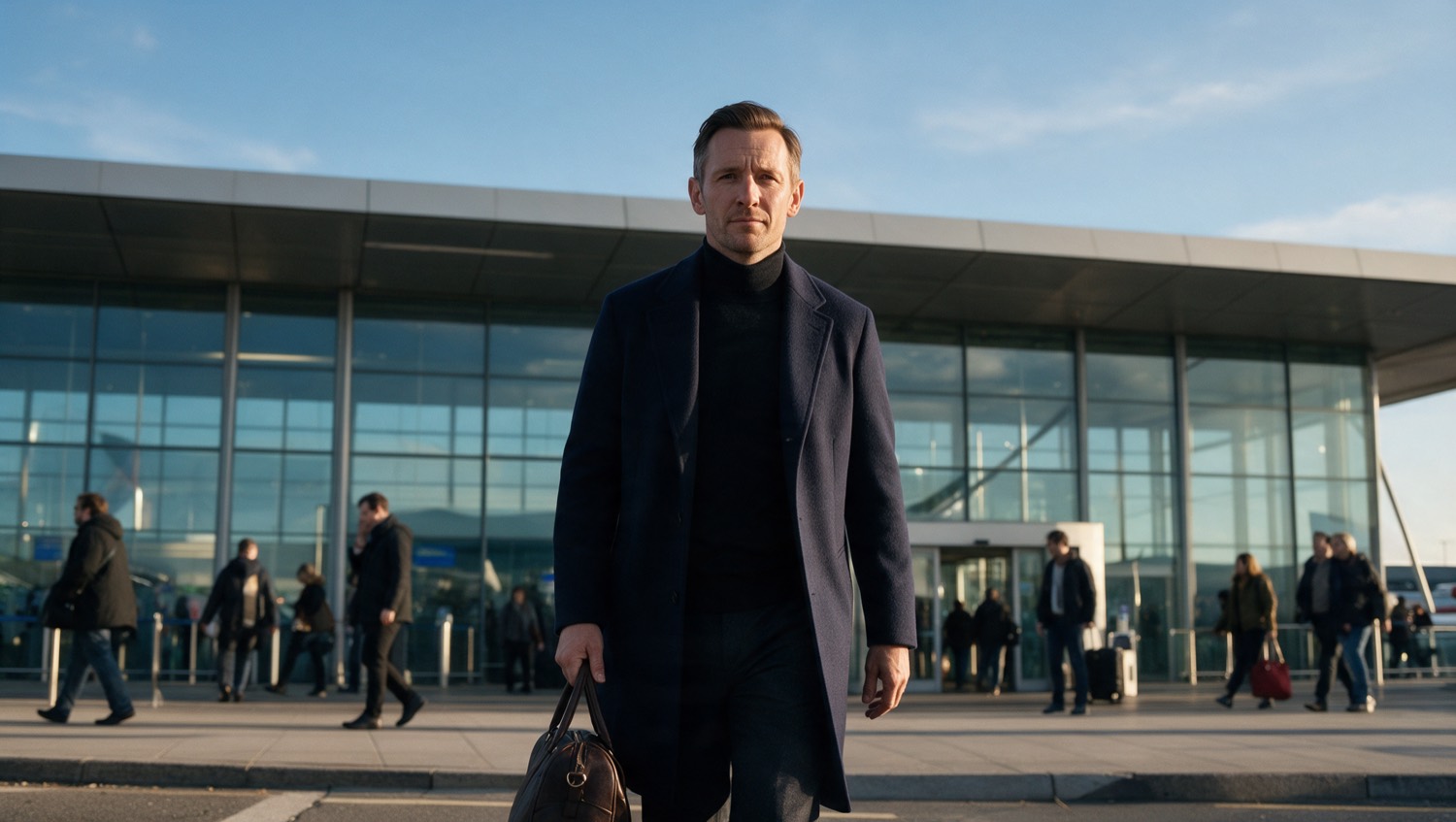
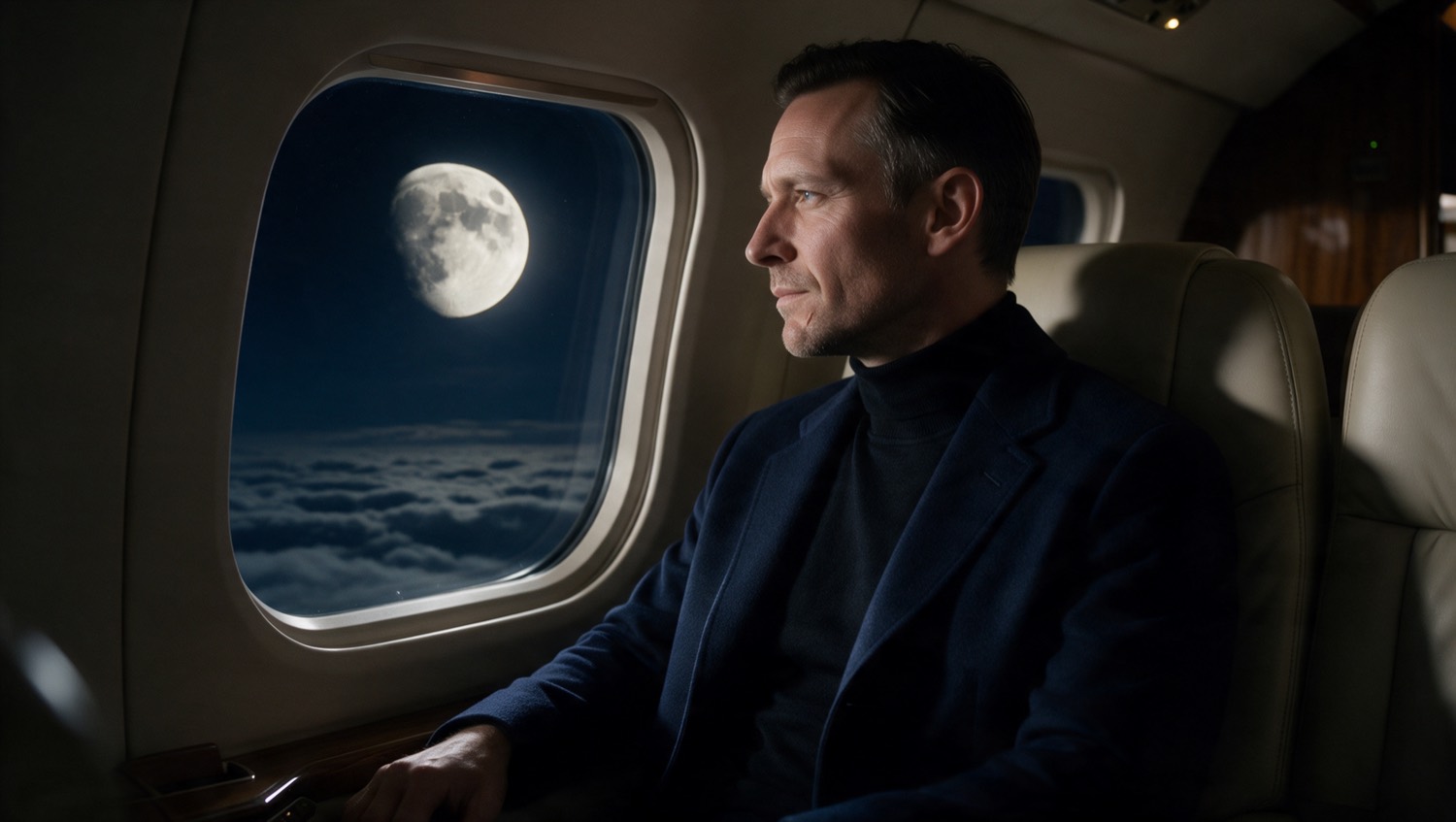
Three of those plates had to be generated first
Each one carries a piece of the story, so each got its own prompt before the film prompt was written.
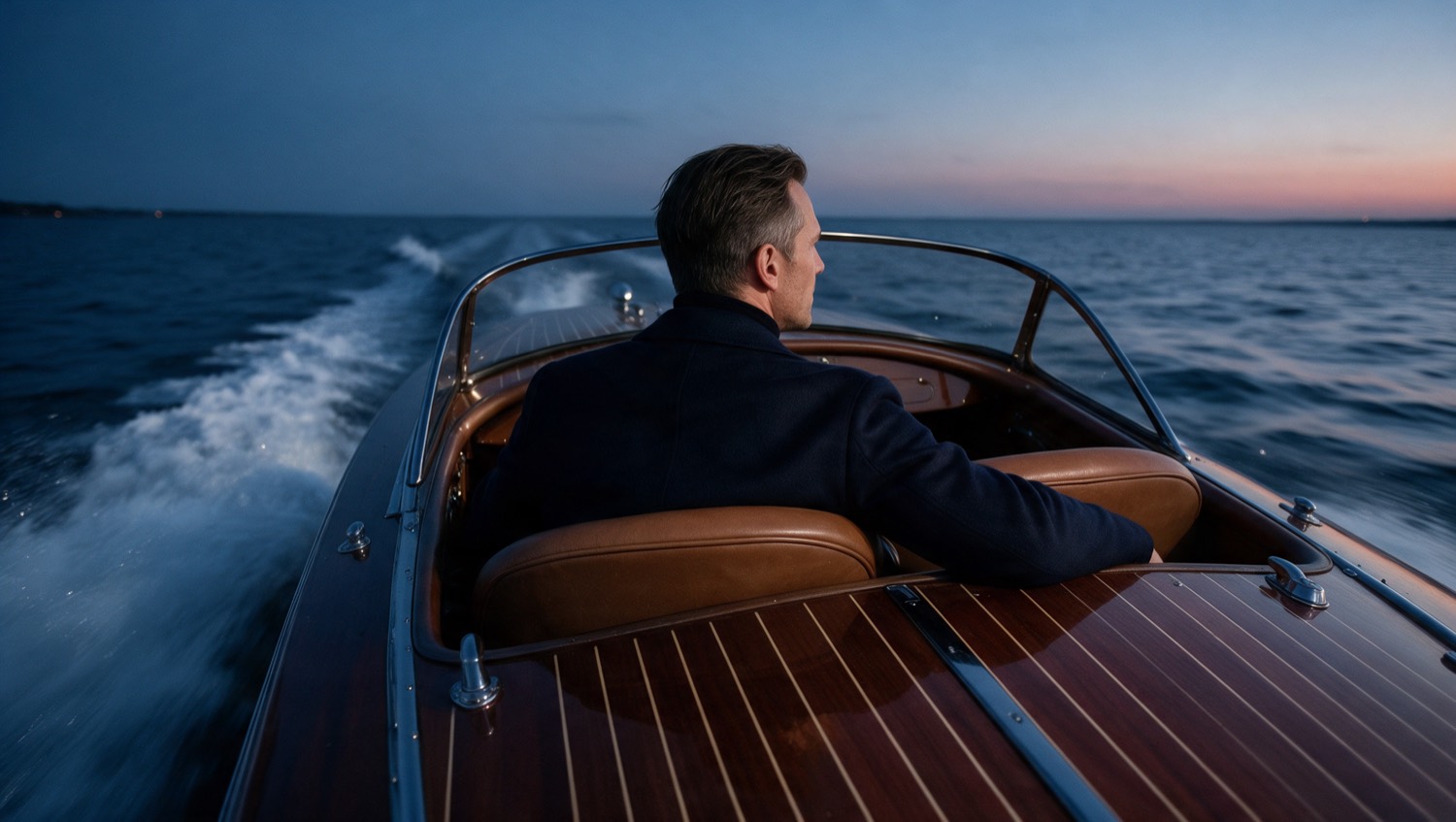
Photorealistic cinematic still, horizontal 16:9, night. The interior of a quiet private jet cabin at altitude, cream leather seats, polished walnut trim, the cabin lights dimmed low so the brightest thing in frame is the window.

A man of 44 sits in a window seat in profile, looking out. He is the character from the reference: lean, dark brown hair cut short at the sides and swept back with grey at the temples, three-day stubble, pale grey-blue eyes, a midnight-navy wool overcoat worn open over a fine black merino roll-neck. He is calm and unhurried, mouth closed, one hand resting on the armrest.

Through the oval window beside him: a deep night sky over a floor of moonlit cloud far below, and in it a large waxing gibbous moon — well past half, roughly three quarters lit, with a clear dark sliver still missing from one side. It is plainly not a full circle.

Medium close shot in profile, 29 degree field of view, eye level, camera from the aisle side. The moon and the cloud outside are the key light, cool at 6500 kelvin, raking across the side of his face and leaving the cabin behind him almost black. One small warm reading light at 2700 kelvin somewhere behind for separation. Deep contrast, shallow depth of field, medium format look, fine organic film grain.

Negative: a full moon, a perfectly round moon, a crescent moon, a half moon, daylight outside the window, a bright cabin, airline branding, safety cards, readable signage, logos, other passengers, cabin crew, a watch visible on his wrist, text, watermark.
Photorealistic cinematic still, horizontal 16:9, blue hour just after sunset. A varnished mahogany runabout speedboat running fast across open dark water, seen from behind and slightly above and to the left, a wide white wake opening away from the stern toward the camera, spray coming off the quarter.

A man of 44 sits low in the cockpit of the boat with his back to the camera, his head and shoulders above the line of the seat, visible from behind and in three-quarter profile so a little of his cheekbone, his jaw and his ear can be seen. He is the character from the reference: dark brown hair cut short at the sides and swept back with grey at the temples, a midnight-navy wool overcoat worn over a fine black merino roll-neck, the collar of the coat lifting in the wind of the boat's travel. One arm rests along the top of the leather seat beside him. He is looking straight ahead over the bow. His hands are not visible.

The cockpit is seen from behind: two tan leather bucket seats, varnished mahogany decking with fine pale seam lines, polished chrome cleats and fittings, the chrome-framed windscreen low and ahead of him. Beyond the bow, open dark water and a last band of sky-blue and soft coral on the horizon.

Wide three-quarter rear shot, 63 degree field of view, camera low and close behind the boat as though mounted on a chase boat a few metres back. Cool blue-hour light at 7000 kelvin, warm coral along the horizon only, no sun in frame. Deep contrast, medium format look, fine organic film grain.

Negative: his hands, a steering wheel visible, hands on a windscreen, hands on any frame or rail, his face toward the camera, standing up, leaning over the side, a billowing coat flying behind him, moon, stars, daylight, a sun in frame, other boats, passengers, modern powerboat styling, outboard motors, brand names, logos, text, watermark.
The car took three references of its own
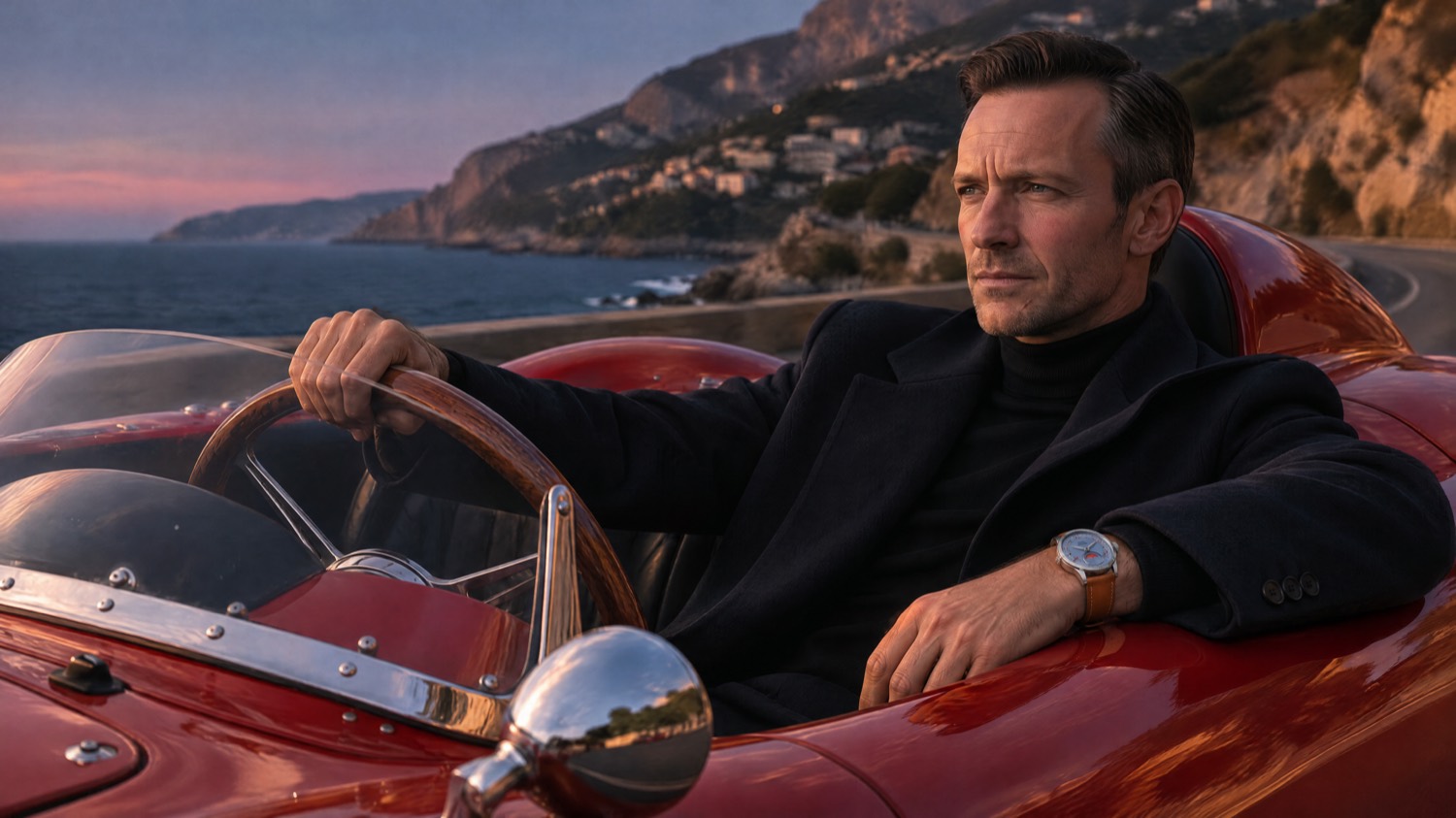
A real photograph I found supplied the camera position and the pose. The character sheet supplied the face. The product sheet supplied the watch. The model's only job was to keep the photograph and swap the driver.
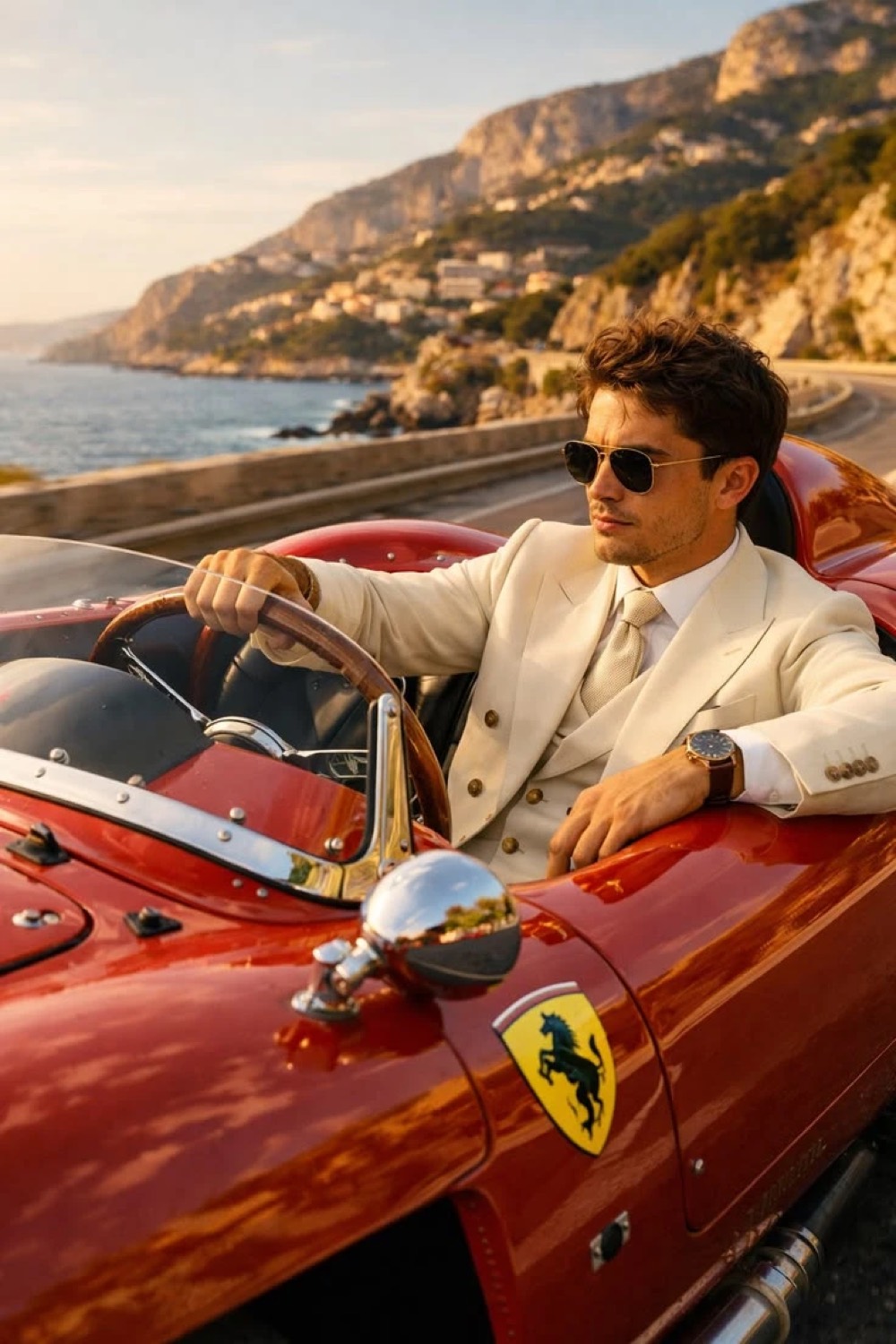
“He's wearing it in both, but he's supposed to be wearing it on his left hand that is on the door. Left hand is the right position to wear a watch.”
Catching it on the draft, before any upscalePhotorealistic cinematic still, horizontal 16:9. <<<image_2>>> is the master for this shot. Keep its camera position, its three-quarter angle onto the car, its seated pose, its lens, its depth of field and its real coastal road exactly as they are. This is a real photograph and the finished image must look like the same photograph taken on the same evening with the same camera. The car, copied from <<<image_2>>>: a 1950s open-top Italian racing roadster in deep glossy red, no windscreen above the cowl except a small low curved wind deflector, a long sculpted red flank running away toward the front of frame, a polished chrome bullet-shaped wing mirror mounted on the cowl, a thin wood-rimmed steering wheel with chrome spokes, and a dark leather interior. Show roughly a quarter of the car in frame as the reference does: the cowl, the near flank, the mirror and the cockpit. The red paint carries real reflections of the dusk sky and the cliff rolling across its curves. The bodywork is plain. Every painted panel is smooth, unbroken red with nothing mounted on it and nothing painted on it — no shield, no emblem, no badge, no crest, no animal, no lettering, no numbers, no stripes anywhere on the car. <<<image_1>>> is the man. Replace the driver with him: a lean Englishman of 44, dark brown hair cut short at the sides and swept back with grey at the temples, three-day stubble, pale grey-blue eyes, no glasses, his eyes clearly visible. Use his face, his hair and his stubble exactly. Do not use <<<image_1>>>'s grey studio background or its flat studio lighting. His wardrobe: a midnight-navy wool overcoat worn open over a fine black merino roll-neck, the coat collar moving a little in the wind. His pose, from the reference: he sits at the wheel turned slightly toward the camera, one hand up on the wood-rimmed steering wheel and the other arm resting along the top of the car door. He looks ahead and off to one side, calm, mouth closed, chin level. The watch, on the wrist of the arm that is resting along the top of the car door, nearest the camera, with the overcoat cuff pulled back a few centimetres so it sits clear on bare skin and is easy to see. It corresponds to <<<image_3>>>: a round brushed stainless steel case, a fluted onion crown, a tan leather strap with pale pink stitching, and a dial that is clearly pale ice-blue, light enough to catch the eye against the dark coat. The watch is caught at a slight angle rather than square to the lens. The wrist of the hand on the steering wheel is bare. The light and the time of day: dusk. Warm low light rakes across his face and along the red flank from ahead and to one side, the sky behind is deep blue with a soft pink band low on the horizon, the sea below is dark. Keep the reference's reflections and contrast, cooled into dusk. Medium shot, 29 degree field of view, the coast road softly out of focus behind him. Medium format look, fine organic film grain. Negative: a Ferrari badge, a prancing horse, a shield, a crest, an emblem, a badge, a logo, lettering or numbers anywhere on the car body, sunglasses, a cream or ivory suit, a tie, a shirt collar, a bare wrist on the arm along the door, a watch on the hand at the steering wheel, a missing watch, two watches, a black or dark coloured car, a blue car, a modern car, a studio background, flat studio lighting on his face, golden midday light, a bright blue daytime sky, a second person in frame, the original driver's face, moon, stars, text, watermark, readable signage.
The film prompt
[GOAL]
Cinematic spec advertisement, 14 seconds, four hard cuts. One man crosses the world over several days — out of an airport, across a night sky, over water, along a cliff road — saying nothing, and checks his watch at the end. Four shots.

[CONTINUITY]
One man in all four shots and nobody else anywhere in the film. He corresponds to <<<image_1>>>: a lean Englishman of 44, six foot one, dark brown hair cut short at the sides and swept back with grey at the temples, three-day stubble, pale grey-blue eyes, wearing a midnight-navy wool overcoat open over a fine black merino roll-neck and dark trousers. Use his face, hair, stubble and wardrobe exactly, and do not use <<<image_1>>>'s flat grey studio background or its even studio lighting — each shot has its own light.
He wears the same watch on the same wrist in every shot: a round brushed stainless steel case on a tan leather strap, under his overcoat cuff and unseen until shot 4.
He does not speak, and his mouth stays closed, for the whole 14 seconds.
Time passes between the shots. Shot 1 is a late afternoon, shot 2 is the night after it, shot 3 is a blue hour some days later, shot 4 is the dusk of the last day.

[PRODUCT]
<<<image_6>>> is the real watch: a round brushed stainless steel case with a fluted onion crown at three o'clock, a pale ice-blue dial, red-orange markers around the chapter ring, two short lines of small type below twelve, a coral-red moonphase window low on the dial with a pale moon in it, two slim silver hands and no seconds hand, on a tan leather strap with pale pink stitching. It appears only in shot 4. Use it for the watch's colours and layout only — do not change the watch's size, position or angle from <<<image_5>>>, do not enlarge it, and do not bring it toward the lens.

[PLACES]
Shot 1 corresponds to <<<image_2>>> — an airport forecourt in late afternoon, a glass terminal frontage behind him, travellers soft and out of focus, pale paving, a clear pale blue sky with thin high cloud. Use its geometry, its light and its background exactly.
Shot 2 corresponds to <<<image_3>>> — the interior of a quiet private jet cabin at night, cream leather, walnut trim, the cabin dim, and through the oval window a waxing gibbous moon with an obvious dark bite out of one side, hanging over a floor of moonlit cloud. Use its geometry, its light and that exact moon shape.
Shot 3 corresponds to <<<image_4>>> — a varnished mahogany runabout speedboat at blue hour seen from behind and slightly above, tan leather seats, chrome fittings, a wide white wake opening toward the camera, a last band of sky-blue and soft coral on the horizon. Use its geometry and its light exactly.
Shot 4 corresponds to <<<image_5>>> — the cockpit of a red open-top vintage roadster on a Mediterranean cliff road at dusk, seen three-quarters from the side, chrome bullet mirror on the cowl, wood-rimmed steering wheel, the sea and a headland behind. Use its geometry, its light, its colour and its framing exactly.

[SHOT 1 | 0-3s | the airport | three-quarter full figure, dolly back]
Camera: three-quarter full figure, 47 degree field of view, chest level, backing smoothly away ahead of him across the three seconds at walking speed, keeping him the same size in frame.
Initial state: he is already walking out of the terminal toward camera, a small dark brown leather holdall in one hand, coat open, stride even.
Action sequence: he walks, unhurried, eyes forward past the lens. Travellers drift behind him, out of focus. The sky above stays empty.
End state: still walking toward camera.
Transition: hard cut to shot 2.

[SHOT 2 | 3-6s | the plane | close profile, locked]
Camera: close shot in profile, 29 degree field of view, eye level from the aisle side, locked off with no movement at all.
Initial state: he sits in the window seat looking out, the moon and the cloud outside lighting the side of his face.
Action sequence: he looks out at the moon. One slow blink. His chest rises once with a breath. Below the moon, the floor of moonlit cloud slides steadily past the window from front to back at the speed of the aircraft, so the frame is never still even though he is. The moon itself keeps exactly the same shape, size, brightness and position for the whole three seconds, because it is far away.
End state: still looking out, the cloud still passing below.
Transition: hard cut to shot 3.

[SHOT 3 | 6-9s | the boat | wide three-quarter rear, lateral drift]
Camera: wide three-quarter rear, 63 degree field of view, low and close behind the boat as if from a chase boat, drifting slowly sideways across the three seconds so the angle onto the stern opens a little.
Initial state: he sits low in the cockpit with his back to camera, head and shoulders above the seat, face in three-quarter profile, one arm along the top of the seat beside him.
Action sequence: the boat runs on, the wake opens and spray comes off the quarter, and the wind moves the collar of his coat and his hair. At about two seconds he turns his head a few degrees further to his side to look out toward the coast, bringing more of his profile into view. He does not turn around toward the camera.
End state: his profile held toward the coast, the boat still running, the wake still opening.
Transition: hard cut to shot 4.

[SHOT 4 | 9-14s | the car | medium, slow push in]
Camera: medium shot, 29 degree field of view, pushing slowly forward across the five seconds to a medium close, the coast road softly out of focus behind him. The push stays on his upper body and face and never travels down onto his wrist.
Initial state: he sits at the wheel of the red roadster, one hand on the wood-rimmed steering wheel, the other arm resting along the top of the car door with the overcoat cuff pulled back and the watch clear on that wrist. He is looking ahead and off to one side.
Action sequence: he drives, the wind moving his hair and the collar of his coat, the dusk light sliding across the red flank. At about 3.5 seconds his eyes drop to the watch on the arm resting on the door. He looks at it, and holds there, calm, for the rest of the shot. His head barely moves.
End state: his eyes down on his own wrist, held still for the last full second.
Transition: end of video.

[VISUAL STYLE]
Photoreal cinematic. Each shot keeps its own light: natural late afternoon daylight at 5600 kelvin on the airport forecourt; cool moonlight at 6500 kelvin through the aircraft window against an almost black cabin; cool blue-hour light at 7000 kelvin on the water with warm coral along the horizon only; and warm low dusk at 4000 kelvin raking across his face and the red flank of the car against a deep blue sky. Across all four: deep contrast, rich blacks that hold detail, shallow depth of field, medium format look, fine organic film grain. The four shots are graded as one film.

[CAMERA AND PERFORMANCE]
Cuts happen only at the three stated points; the camera does not cut on its own. Every move is slow, smooth and even, with no sudden acceleration, no roll, no whip and no handheld shake beyond a few pixels of natural wander.
He is the same calm, unhurried man in all four shots. His lips stay closed for the whole 14 seconds and he never speaks, smiles or frowns. The performance is in the eyes and the breathing: a steady forward gaze, one slow blink on the plane, and at the end one unhurried drop of the eyes to his own wrist, the way a man checks a watch he already trusts. Skin at pore level, visible stubble, catch-lights in the eyes, natural breathing.

[AUDIO]
<an airport forecourt in the open air, distant terminal hum, footsteps on paving, a suitcase wheel somewhere behind>
<the flat steady drone of a pressurised cabin at altitude, very quiet>
<a wooden hull slapping across chop, an engine note behind it, wind and spray>
<a low vintage engine under load, wind moving over an open car, the sea somewhere below>
The ambience changes completely and instantly at every cut, with no sound carrying across from one place to the next.

[EXCLUSIONS]
No music of any kind: no piano, no strings, no orchestra, no score, no underscore, no swell, no riser, no sting, no sustained tonal bed or atmospheric pad. Ambience and real physical sound only.
No speech, no dialogue, no voiceover, no narrator, no humming, no breath performed as sound design.
Exactly one person in frame in every shot: nobody else on the plane, nobody else in the boat, nobody else in the car, and no driver or boatman anywhere.
No moon and no stars in the airport sky, the boat sky or the car sky. The only moon in this film's fourteen seconds is the one through the aircraft window.
The moon through the aircraft window keeps a clear dark bite out of one side and never becomes a full circle, never brightens and never moves.
The watch stays on the arm resting along the car door, at the same size and the same angle as <<<image_5>>>, its face angled away from the lens and never coming into sharp focus, and the camera never pushes in on it. There is exactly one watch in the film and it never appears in shots 1, 2 or 3.
No clock ticking and no watch ticking.
No readable writing, lettering, numbering or signage anywhere in any shot, and no brand badges, emblems, logos or crests on the car, the boat, the aircraft or the terminal.

[MAINTAIN CONSISTENCY]
The same man, the same face, the same grey at the temples, the same stubble, the same midnight-navy overcoat over the same black roll-neck, in all four shots. The same watch on the same wrist throughout, hidden until shot 4. One person only, everywhere. The same grade, the same contrast and the same grain across all four shots.
07
The steps — three tries
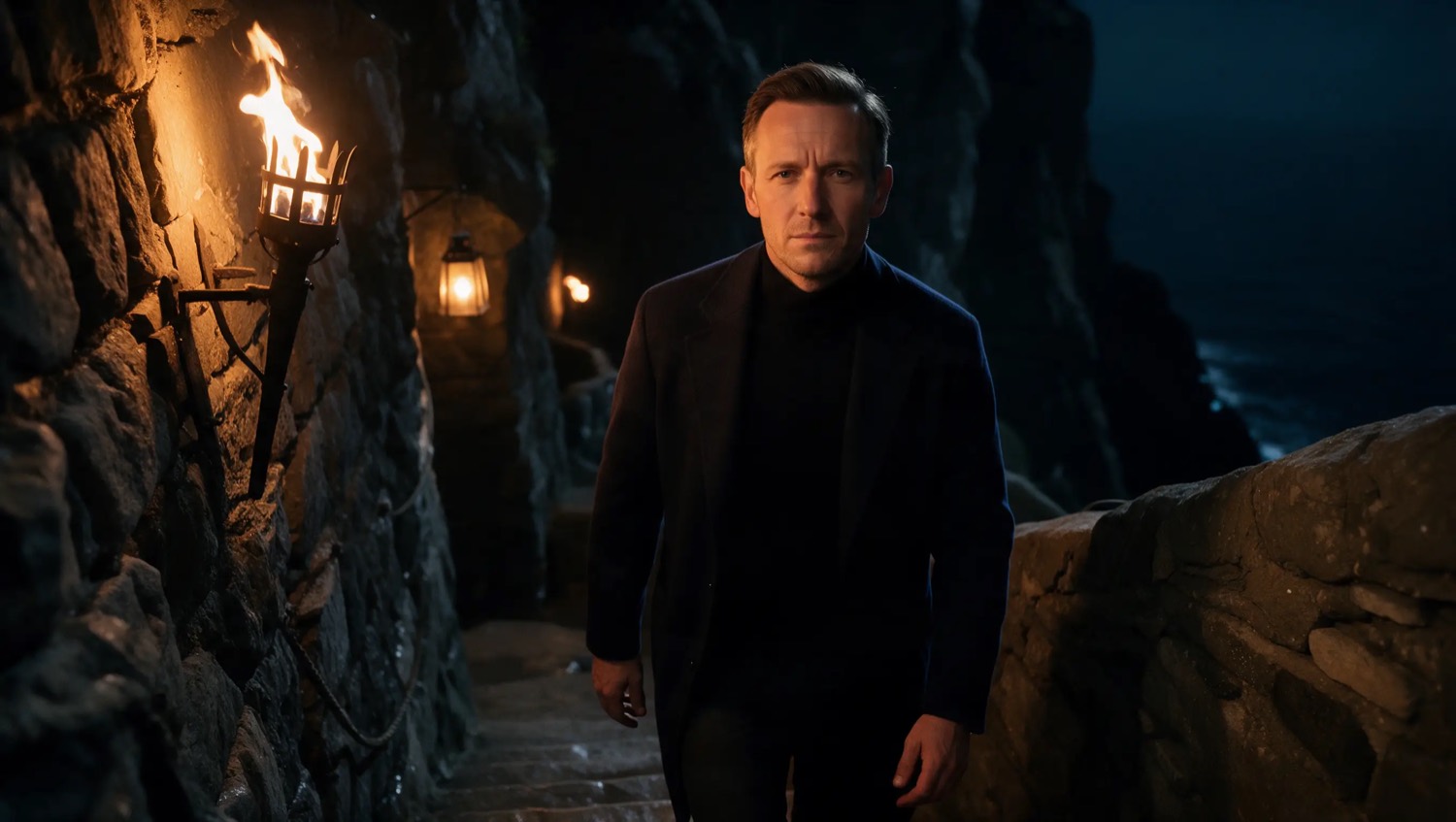
He climbs a torch-lit stairway, shoves his cuff back without breaking stride, and the film cuts to his wrist. This is the shot that taught me the most, because the first two drafts were wrong in ways I could name exactly.
Draft one
“The video came out very poor… I didn't like the way he just stopped. It just stopped. We're not supposed to let it breathe at all. As soon as it stopped, we're just supposed to cut to where he raised his hand to check the time. And we're supposed to see it from his first person view — not him flipping the wrist or showing the camera.”
Draft two
“The video came out slow, and when it showed the reverse showing his face, he was looking at the camera. He was supposed to just act normal and walk normal. I don't know why it's having slow motion and there's piano playing in the background.”
The fix was not a better camera instruction. It was a block of exclusions written against those exact failures — no slow motion, no catwalk, no posed steps, no complete stop before the arm lifts, he never looks into the lens, shot three is live footage and never a frozen frame. Guessing at exclusions makes a prompt long. Writing them against a real draft makes it work.
What I attached on the third try
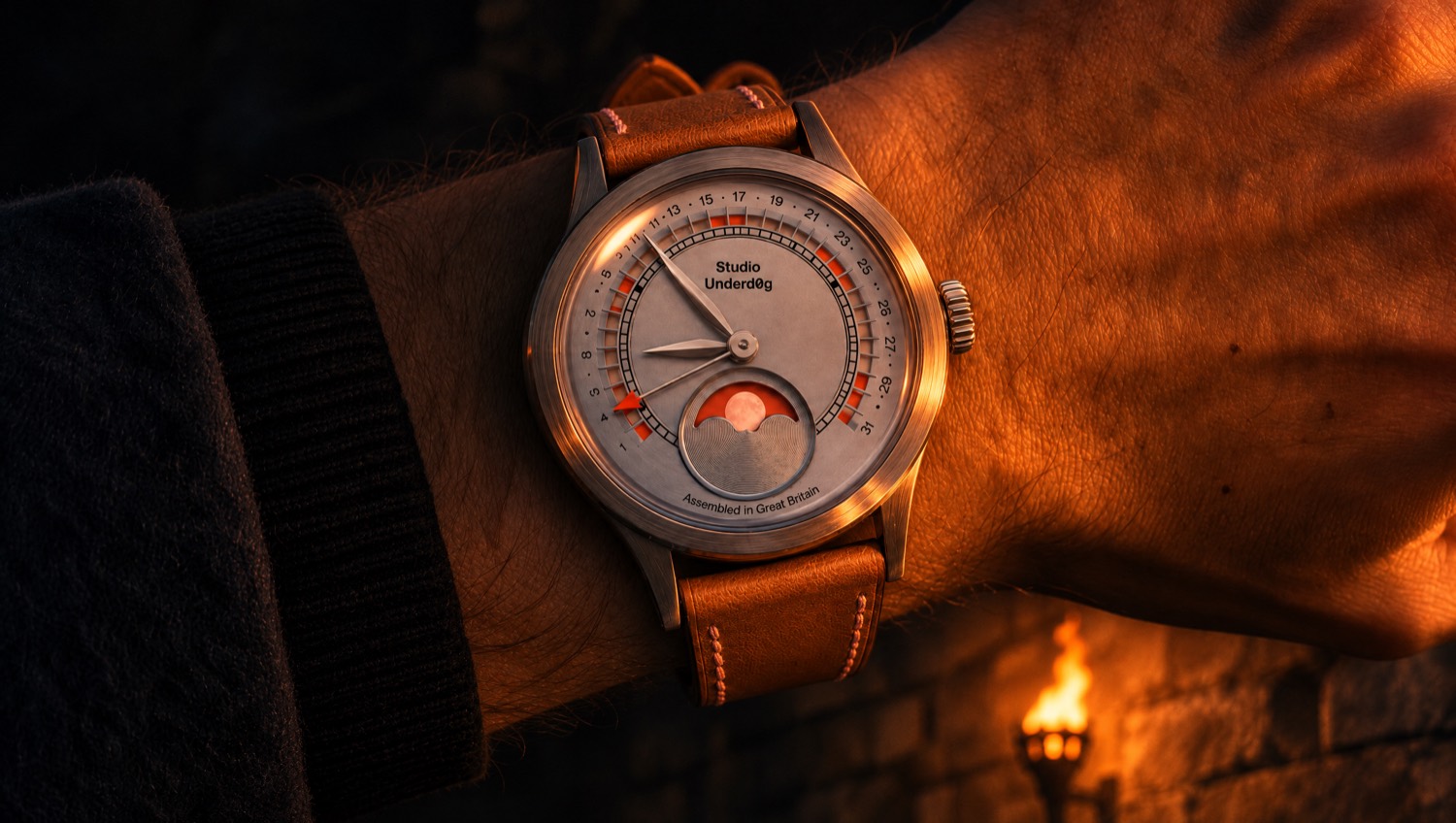
That fourth reference is the point. Instead of describing the final close-up, I generated it as a still first and told the prompt to land on that picture.
Photorealistic extreme close-up macro still, horizontal 16:9, at night beside a burning torch on a stone wall.

@Image 1 is the master for the framing: keep its composition, its distance, its angle onto the wrist and the size of the watch in frame exactly as they are. Only the light and the background change.

The subject: a man's wrist filling the frame, wearing a round brushed stainless steel watch with a fluted onion crown at three o'clock on a tan leather strap with pale pink stitching, corresponding to @Image 2. Fair skin with real texture, visible pores and fine dark hair. A midnight-navy wool overcoat cuff and a black merino roll-neck sleeve pushed back at the edge of frame.

The light: warm iron torchlight at 2000 kelvin coming from one side, close and low, deep orange and uneven, the kind of light that flickers. It rakes hard across the steel case, catches the raised edge of the bezel and the stitching on the strap, and falls off fast into near black on the far side of the wrist. The skin carries that warm orange on the lit side and goes almost black in shadow. One soft highlight travels across the crystal.

The background: dark worn stone a short distance behind the wrist, thrown out of focus, with one blurred warm point of torch flame low in the frame and deep blue-black night beyond it. No sky, no sea, no horizon, no cool blue or pink.

Deep contrast, rich blacks that still hold detail, medium format look, fine organic film grain.

Negative: cool blue light, dusk light, a blue or pink sky, a horizon, a sea, daylight, soft even lighting, flat lighting, a bright background, a second watch, fingers across the dial, a hard white blowout on the crystal, text, watermark, logos.
The prompt that worked
[GOAL]
Cinematic advertisement, 10 seconds, three shots, two hard cuts, real time throughout. A man climbs a torch-lit stone stairway at night, pushes his sleeve back as he walks and glances at his watch, and the film cuts to the watch.

[CONTINUITY]
One man, alone. Nobody else appears in any shot.
He corresponds to <<<image_1>>>: an Englishman of 44, lean and slim, a long narrow face with a strong square jaw and hollow cheeks, dark brown hair cut short at the sides and swept back, grey at the temples, three-day stubble, pale grey-blue eyes, a long straight nose. Midnight-navy wool overcoat worn open over a black merino roll-neck, dark trousers, black oxfords. Take his face, build and clothes from this reference. Do not take its grey studio background or its studio lighting.
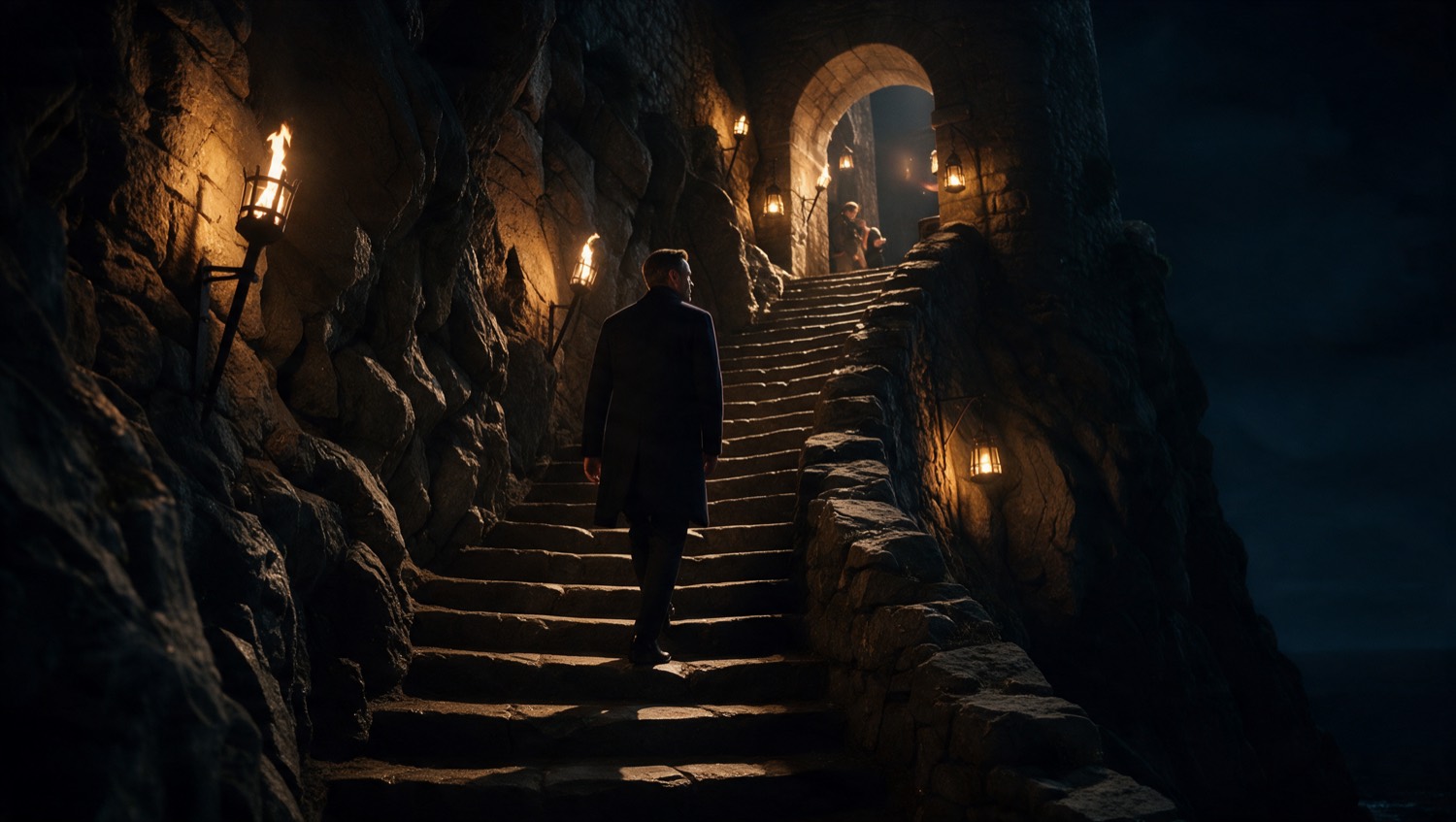
The stairway corresponds to <<<image_2>>>: narrow worn stone steps cut into a cliff at night, iron torches and hanging lanterns on a rough stone wall to one side, open dark sea far below on the other, a lit stone archway at the top.
<<<image_3>>> is the same man on these steps in torchlight. Take only his face, his build and his clothing from it. Do not take his eye line from it.
<<<image_4>>> is the watch, used in shot 3 only.
He climbs upward throughout shots 1 and 2. The steps always fall away beneath and behind him; the archway is always above him.
His mouth stays closed for all 10 seconds.

[SHOT 1 | 0-3s | behind him | wide 63° rising to medium 47°]
Camera: starts wide at 63 degree field of view, low on the steps behind and below him, him small in the lower third, the lit archway above. Over three seconds it rises and closes to a medium shot at 47 degrees with him centred. Both framings are required.
Initial state: he is mid-climb, seen from behind, torchlight across his shoulders.
Action: he climbs six steps in these three seconds at an everyday walking rhythm, two steps per second, arms swinging. Motion blur on his trailing foot each time it leaves a tread.
End state: nearer the top, still climbing, still from behind.
Transition: hard cut to shot 2.

[SHOT 2 | 3-7s | in front of him | medium wide 47° tilting down to medium 29°]
Camera: starts at 47 degrees, high on the steps looking down at him as he climbs toward the lens. Over four seconds it tilts down with him and closes to 29 degrees, framing him waist up. Both framings are required.
Initial state: he is six steps below the camera, front on, face lit from the side by torches, the treads dropping away behind him toward the sea.
Action: 3.0 to 6.0s — he climbs five more steps toward the camera at the same everyday rhythm, arms swinging, his weight rolling from one foot to the other. His eyes stay down on the treads a pace or two ahead of his own feet, scanning the stone the way anyone watches their footing on an uneven stair. At 5.0s, still walking, his left arm comes up across his chest and his right hand shoves the heavy coat cuff back off the left wrist in one rough automatic movement. At 6.0s his eyes drop from the treads to the watch and his stride bleeds off as his attention lands on his wrist.
End state: left wrist up at chest height, cuff shoved back, eyes down on the watch, body still settling out of the last step.
Transition: hard cut to shot 3.

[SHOT 3 | 7-10s | the watch | extreme close-up 18°, locked]
Camera: locked extreme close-up of his own wrist at the framing, distance and angle of <<<image_4>>> — the wrist across the lower frame, the watch filling the centre third of the picture and clearly readable, dark torch-lit stone soft behind it with one blurred point of flame low in frame.
Initial state: the wrist raised and held, as <<<image_4>>> shows it.
Action: this is a live shot of a real wrist, not a still image. The arm is held up and it behaves like a held arm: a faint involuntary tremor runs through the hand, the tendons shift a little under the skin, a slow pulse moves at the base of the thumb, and his breathing lifts the forearm a few millimetres and lets it settle. Behind him the torch flame gutters and swings, and its warm light crawls and flares across the curved crystal and along the polished edge of the case, changing shape continuously for all three seconds. One or two fine hairs on the forearm stir in the sea wind.
End state: the wrist still held up, the flame still moving.
Transition: end of video.

[THE WATCH]
Match <<<image_4>>>: brushed steel case, fluted onion crown at three o'clock, pale ice-blue dial, a date arc of small numerals 1 to 31 across the top with red-orange markers, a red-orange arrow-tipped pointer low on the left, two silver hands, no seconds hand, and at six o'clock a guilloché sub-dial with a domed window, two silver hills along its lower edge, coral-red sky behind them and a pale pink moon risen most of the way but not yet in the dip. The hands, the pointer and the moon hold their exact positions for the whole shot; only the light on the watch changes.

[VISUAL STYLE]
Photoreal, shot on a real camera at normal frame rate. Warm iron torchlight at 2000 kelvin from the wall, deep orange and uneven, dropping off fast into blue-black night. Heavy contrast, rich blacks with detail, shallow focus, medium format look, fine film grain. All three shots graded as one scene.

[CAMERA AND PERFORMANCE]
Cuts only at 3s and 7s. Both camera moves are steady and even, no sudden acceleration, no roll, no whip.
He moves like an ordinary man late in the evening, not like a model on a runway. Even stride, natural arm swing, level shoulders, weight rolling through each step. He is not making an entrance. Checking the watch is a reflex done on the move. His gaze belongs to the stairway and his own wrist and goes nowhere else.
Pore-level skin, visible stubble, torchlight catch-lights, natural breathing.

[AUDIO]
All sound in this film is location sound recorded on the night, diegetic only.
<leather soles landing on worn stone, two steps a second, through the first seven seconds, then stopping>
<iron torches guttering and hissing on stone, carrying into the last shot>
<a party somewhere above: voices, glasses, a low murmur>
<heavy wool dragging as the cuff is shoved back>
<sea wind moving past the cliff>

[EXCLUSIONS]
Real-time playback only; the footage is never slowed.
He never looks into the lens.
Shot 3 is live footage and never a frozen frame.
There is no score.
Exactly one person in frame throughout.
No moon or stars in the sky; the only moon is on the dial.
No readable text anywhere except the small type already on the dial.

[MAINTAIN CONSISTENCY]
The same lean narrow-jawed man, the same hair, the same stubble, the same navy overcoat over the same black roll-neck in shots 1 and 2. The same stairway and the same torchlight in all three. One person only. The watch matches <<<image_4>>>.
“We finally got it right. Wow. Thank God.”
08
The terrace — one unbroken take
Eighteen seconds, two men, six lines, no cuts. The camera walks in, holds the two-shot, arcs behind their shoulders and pulls back onto the moon. The hardest thing in the film, and it is one prompt.
The plate I had to regenerate
My first terrace plate had both men already standing together at blue hour. It was a nice picture and it was useless: the shot needs the Guest to arrive, so the frame has to start with the Host alone, and it has to be full night. So I regenerated it.
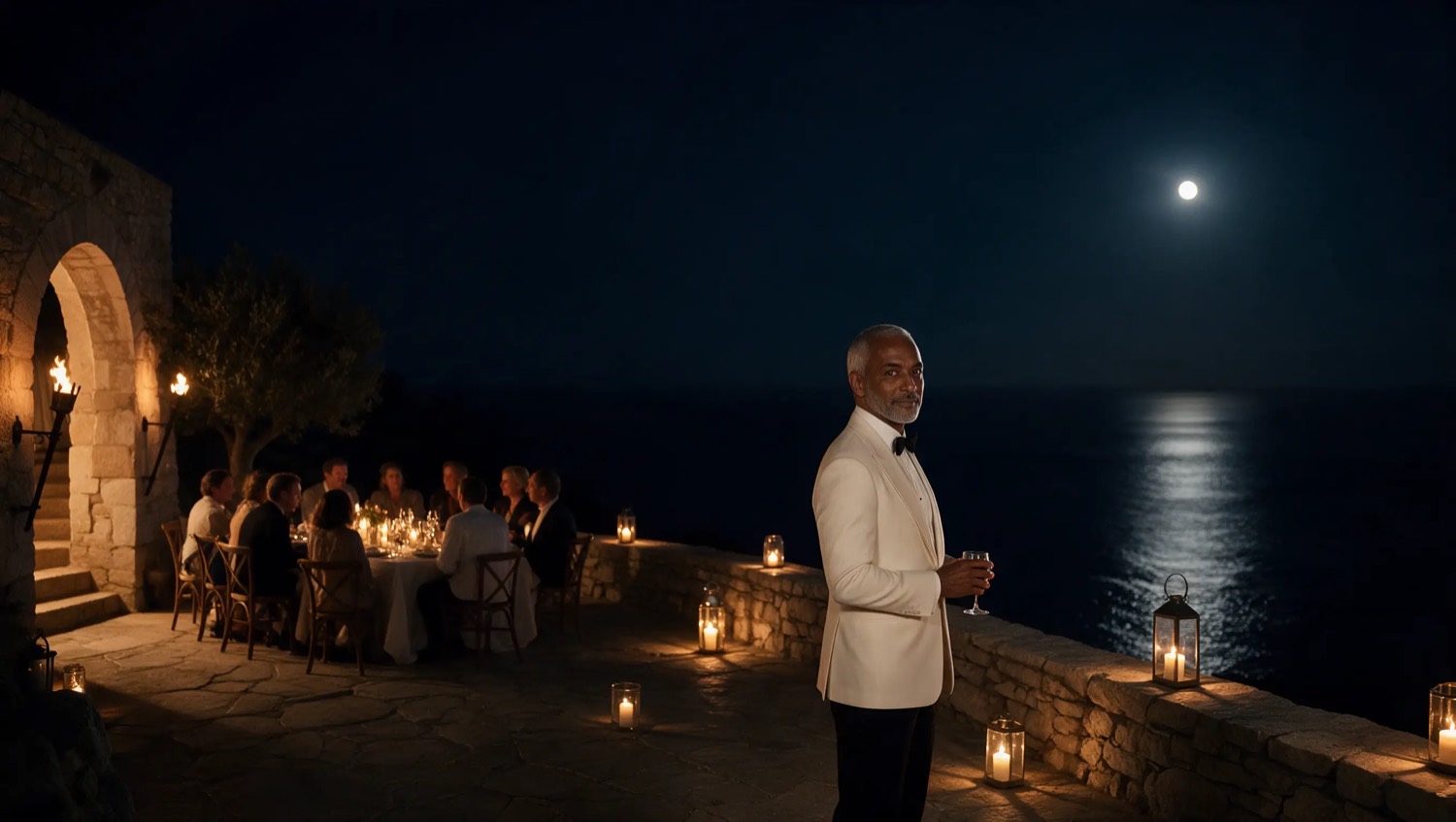
“Image one is perfect. Why? Because it shows where the guest is going to come in from, right? And then it's going to meet with the host, and then they talk, and then they face the moon. I think it captures everything.”
What I attached
I wrote the dialogue myself
“Right on time. The guest already smiling. ‘You didn't give me a date.’ He said, ‘I gave you a moon.’ And see, the both of them they turn. As soon as they turn, while they're facing the moon, I want the host to say, out of 100, only few of you made it here. Then the guest should say, next time put a date on it. Then, where's the fun in that?”
Six lines, dictated out loudThe prompt then describes the terrace left to right — archway, olive tree, candlelit table, open stone, low wall, black sea, moon high on the right — and calls that geography the law for this film. Giving the model a map is what keeps an eighteen-second arc from drifting into a different place halfway round.
“Now give me the full prompt for the video and all the reference image I need to attach. Make sure the directing is top notch and I don't want to burn my credits. Make sure we get everything in one go.”
[GOAL]
Cinematic advertisement, 18 seconds, one continuous shot with no cuts, real time throughout. A man arrives at a clifftop party at night, the host crosses to meet him, they exchange six short lines, and they end up side by side looking out at the moon while the camera arcs behind them and pulls away.

[CONTINUITY]
Two men in sharp focus and nobody else. The seated guests stay seated, soft and out of focus, and none of them stands, approaches, turns to camera or speaks.
The Guest corresponds to <<<image_1>>>: an Englishman of 44, lean and slim, a long narrow face with a strong square jaw and hollow cheeks, dark brown hair cut short at the sides and swept back, grey at the temples, three-day stubble, pale grey-blue eyes. Midnight-navy wool overcoat worn open over a black merino roll-neck. Take his face, build and clothes from this reference, not its grey studio background or its studio lighting.
The Host corresponds to <<<image_2>>>: a man of 55, warm brown skin, silver-grey hair cropped close and combed back, a short neat grey beard, warm dark brown eyes, an ivory dinner jacket over a white dress shirt with a black bow tie. Take his face, build and clothes from this reference, not its grey studio background. Both wrists bare, no watch at any point.
The terrace corresponds to <<<image_3>>> and its geography and its night lighting are the law for this film. Left to right: a lit stone archway with burning torches where the cliff steps come up, an olive tree, a long candlelit table with eight or nine seated guests, then open bare stone floor across the middle and right, then a low dry-stone wall with lanterns on it, and beyond the wall the open black sea. High over that sea on the right hangs the moon, small and bright and far off, laying a narrow silver path on the water. The sky is deep navy-black and stays darker than the lit tablecloth for every frame. The candle and lantern flames and the moon are the brightest things in the picture. There is no glow, band or colour at the horizon.
The moon never moves, never grows and never sits behind either man's head.
No watch is visible at any point and neither man looks at his wrist.
Dialogue language: English throughout. Every line is spoken quietly, at the volume two men use standing close together outdoors at night.

[SHOT 1 | 0-18s | one continuous arcing take, no cuts | 47° → 29° → 47°]
Camera: one unbroken take, handheld on a stabilised rig, with a few pixels of natural wander and no shake beyond that. It opens on exactly the framing of <<<image_3>>> at 47 degree field of view, chest level. Over the first seven seconds it travels forward and to the right into the open stone floor, closing to a two-shot at 29 degree field of view that holds both men from the chest up, near enough that the lantern and candle light clearly models both faces and every expression is legible. From nine seconds it arcs continuously around the pair, passing their left shoulders and travelling round behind them while rising about half a metre, so that by fifteen seconds it sits behind both heads looking past them at the moon. Over the last two seconds it draws back and up to 47 degrees, the two men dark and small in the lower left, the black water and the moon filling the rest of the frame. The camera never cuts, never halts and never reverses. As it travels it drifts a little toward whichever man is speaking without ever stopping.
Initial state: the terrace exactly as <<<image_3>>> — the Host standing in the open floor near the wall with a glass, half turned toward the sea, the archway on the far left empty and lit by its torches.

Action sequence:
0.0 to 1.2s — the Guest steps out of the lit archway onto the stone and comes forward, crossing the open floor toward the Host. He covers four strides at an everyday walking pace.
1.2 to 3.0s — the Host hears him, turns, and his face opens with real pleasure. He sets his glass down on the wall and crosses to meet him, three strides, so the two of them come together in the open floor clear of the table.
3.0 to 4.5s — they meet. The Host takes his hand and puts his other hand on the Guest's shoulder. He speaks in natural conversational American English with a warm, relaxed East Coast accent, generous, the smile audible in it: {Right on time.}
4.5 to 7.0s — the Guest is already smiling before he answers, an easy warm smile between two men who know each other well. He speaks in natural conversational British English with a crisp Received Pronunciation accent, low and dry and plainly amused: {You didn't give me a date.}
7.0 to 9.0s — the Host grins, and on the last word he tips his chin to his right, out toward the open sea and the moon: {I gave you a moon.}
9.0 to 11.0s — both men turn to their right together and face out over the black water at the moon, stepping to the low stone wall and settling shoulder to shoulder. The camera begins its arc. Neither man turns his head to the other again for the rest of the film.
11.0 to 13.5s — facing the moon, the Host says in the same warm American accent: {Out of a hundred, nine of you made it.}
13.5 to 15.5s — facing the moon, the Guest answers in the same dry British accent with a small laugh already under it: {Next time, put a date on it.}
15.5 to 17.0s — the Host laughs, a short warm laugh from the chest, and claps him once on the back as he says in the same warm American accent: {Where's the fun in that?}
17.0 to 18.0s — the two of them are still laughing quietly, shoulders moving with it, coats and hair stirring in the sea wind, the lantern flames moving on the wall beside them. The camera is behind them and drawing away.
End state: two dark figures side by side at the wall in the lower left, the black sea and the small bright moon filling the frame.
Transition: end of video.

[VISUAL STYLE]
Photoreal, shot on a real camera at normal frame rate, at full night. Warm candle, lantern and torch light at 2000 to 2700 kelvin pooling on the table, the wall and the stone floor and dropping off fast into black. Cool moonlight at 4100 kelvin edging both men's shoulders and laying a narrow broken silver path across the water. The sky stays darker than the lit tablecloth for the whole take. Heavy contrast, deep blacks that still hold detail, shallow focus, medium format look, fine film grain. One grade from first frame to last.

[CAMERA AND PERFORMANCE]
One continuous take. There is no cut, no edit, no jump and no change of angle anywhere in the 18 seconds. Every part of the move is steady and even, with no sudden acceleration, no roll and no whip. The whole clip plays at normal real-time speed.
These two men like each other and have done for years. The Guest is warm from the moment he sees the Host — his face opens, his shoulders drop, he is glad to be here. He is never cold, guarded, stern or blank. His dryness is affection, not distance.
The Host is generous and delighted throughout, his warmth arriving in his eyes a beat before his mouth.
Each line is spoken late in its own beat with the mouth closed before and after it. Lip movement matches every line exactly. The last three lines are spoken side by side with neither man turning his head.
Both faces are clearly modelled by candle and lantern light whenever either man speaks, bright enough to read every expression. Neither man is ever a silhouette while speaking.
Nobody is ever still: between lines there is breathing, weight shifting from foot to foot, the sea wind moving hair and the hem of the overcoat, and the lantern flames moving continuously. The final second is live footage of two men laughing, never a frozen frame.
Neither man ever looks into the lens.
Pore-level skin, stubble on the Guest, a close grey beard on the Host, catch-lights in every eye.

[AUDIO]
All sound in this film is location sound recorded on the night, diegetic only.
<a clifftop terrace at night: low conversation from a long table, glasses, cutlery>
<sea wind across stone and through olive leaves, waves far below the cliff>
<leather soles crossing a stone floor, two men walking toward each other>
<a glass set down on a stone wall>
{Right on time.}
{You didn't give me a date.}
{I gave you a moon.}
{Out of a hundred, nine of you made it.}
{Next time, put a date on it.}
{Where's the fun in that?}
<two men laughing quietly together at the end>

[EXCLUSIONS]
One continuous take only; there is no cut, edit or change of angle anywhere.
Real-time playback only; the footage is never slowed.
Neither man looks into the lens.
There is no score.
Only these six lines are spoken. Nobody at the table speaks.
The two men speak in clearly different voices and accents and neither sounds like the other.
The Guest is warm and pleased throughout.
It stays full night for the whole take: the sky is never blue, never pale, never dawn, never dusk, never daylight and never brighter than the lit table, and no glow or colour appears at the horizon.
The moon stays small and far out over the sea and never grows, moves or passes behind either man.
No watch appears and neither man looks at his wrist.
Nobody except the Host stands, crosses, approaches or enters frame.
The last second is live footage, never a frozen frame.
No readable text, signage, badges or logos anywhere.

[MAINTAIN CONSISTENCY]
Two men in sharp focus and no others, for the whole unbroken take. The same lean narrow-jawed Guest in the navy overcoat and black roll-neck. The same silver-haired, grey-bearded Host in the ivory dinner jacket and black bow tie, wrists bare. The same terrace, archway, table, wall, lanterns and small distant moon throughout. One grade, one contrast, one grain, one continuous camera, full night from first frame to last.09
The dial is a still, not a shot
The whole story turns on a moonphase filling up. No video model will hold that dial steady and readable for two seconds. So the dial shots are not shots — they are stills dropped on the timeline with a slow push.
Each one is the same wrist macro with two things changed: the light, and where the moon sits in the window. Put in order, they are the plot.
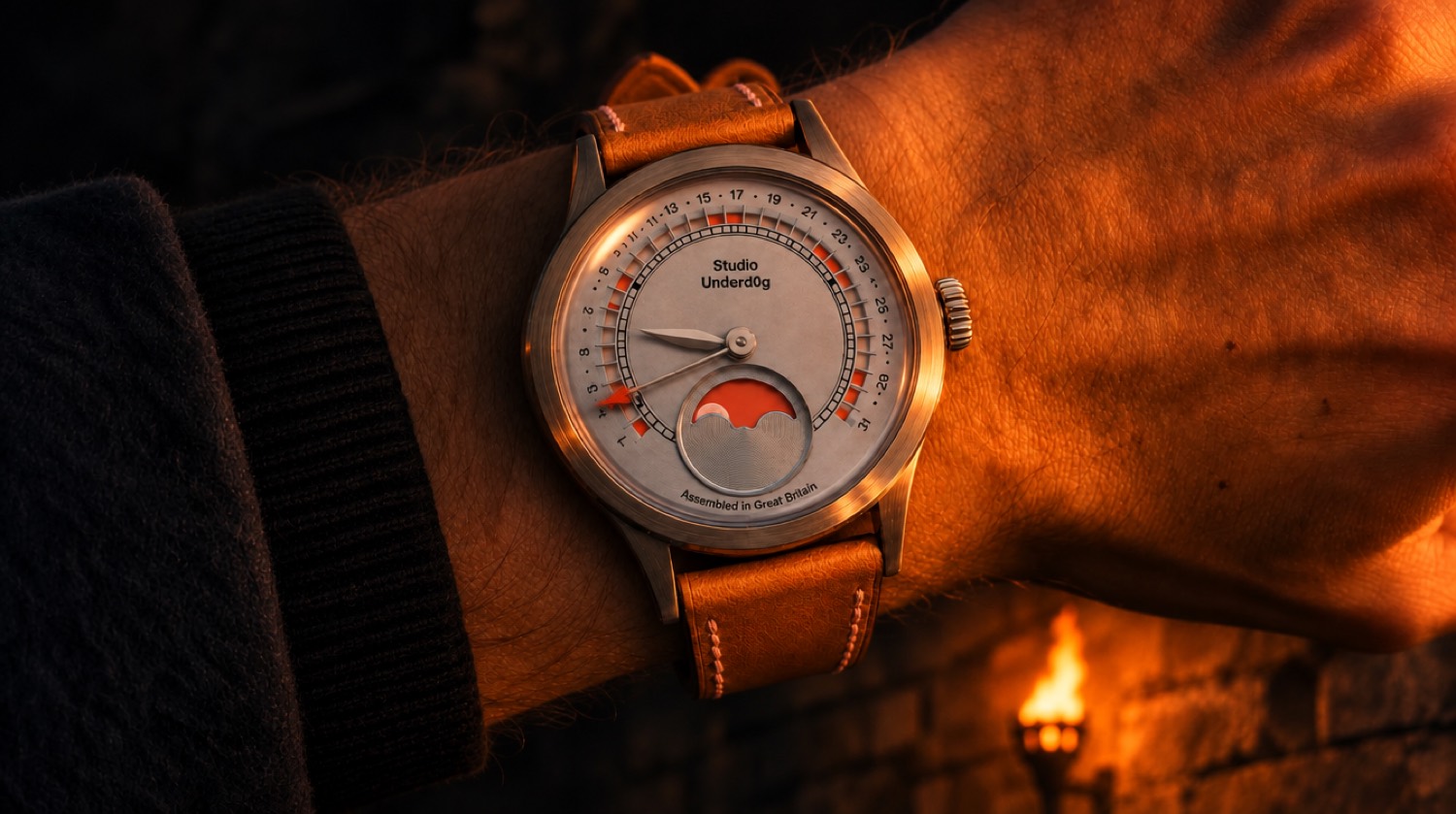
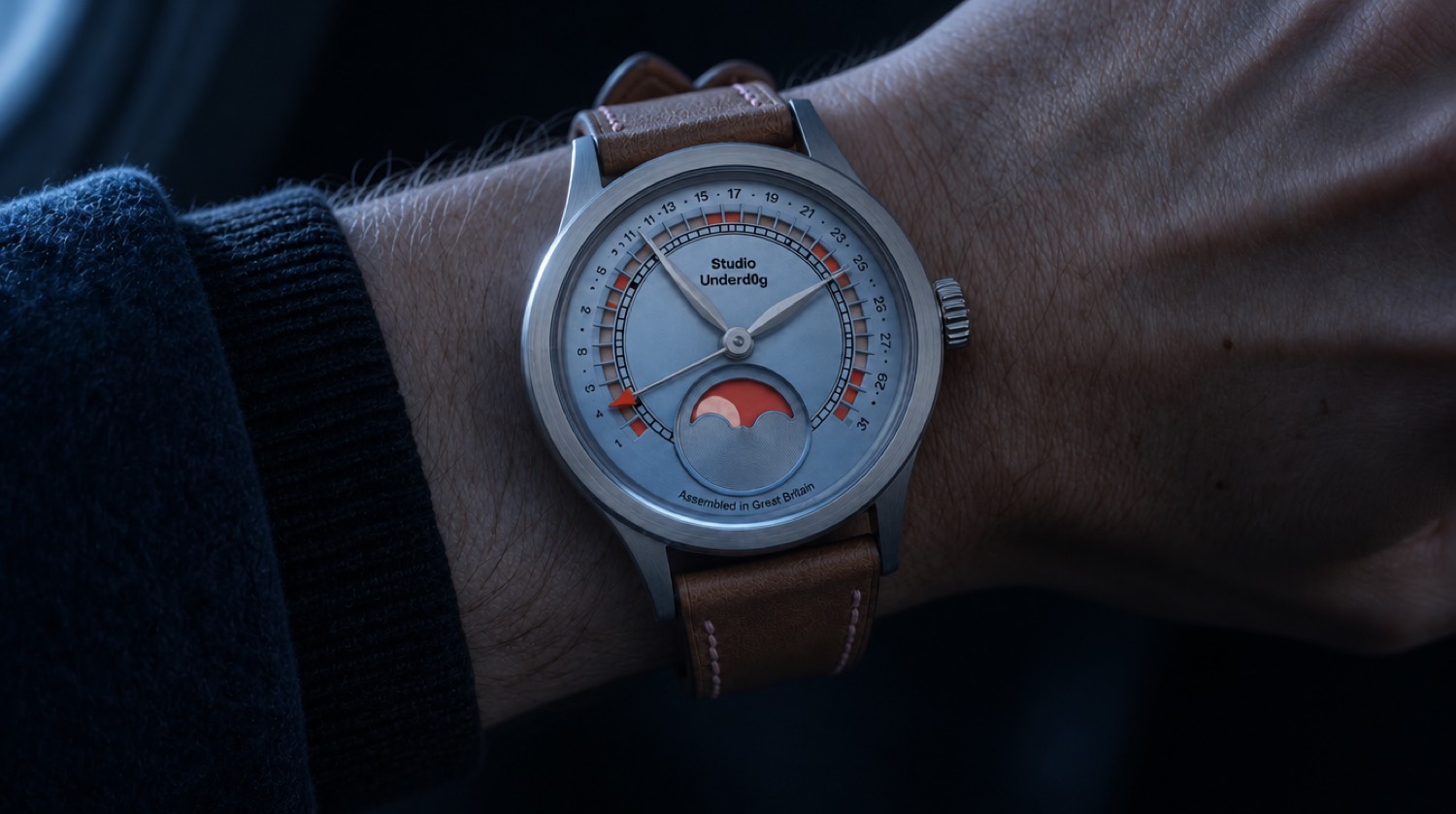
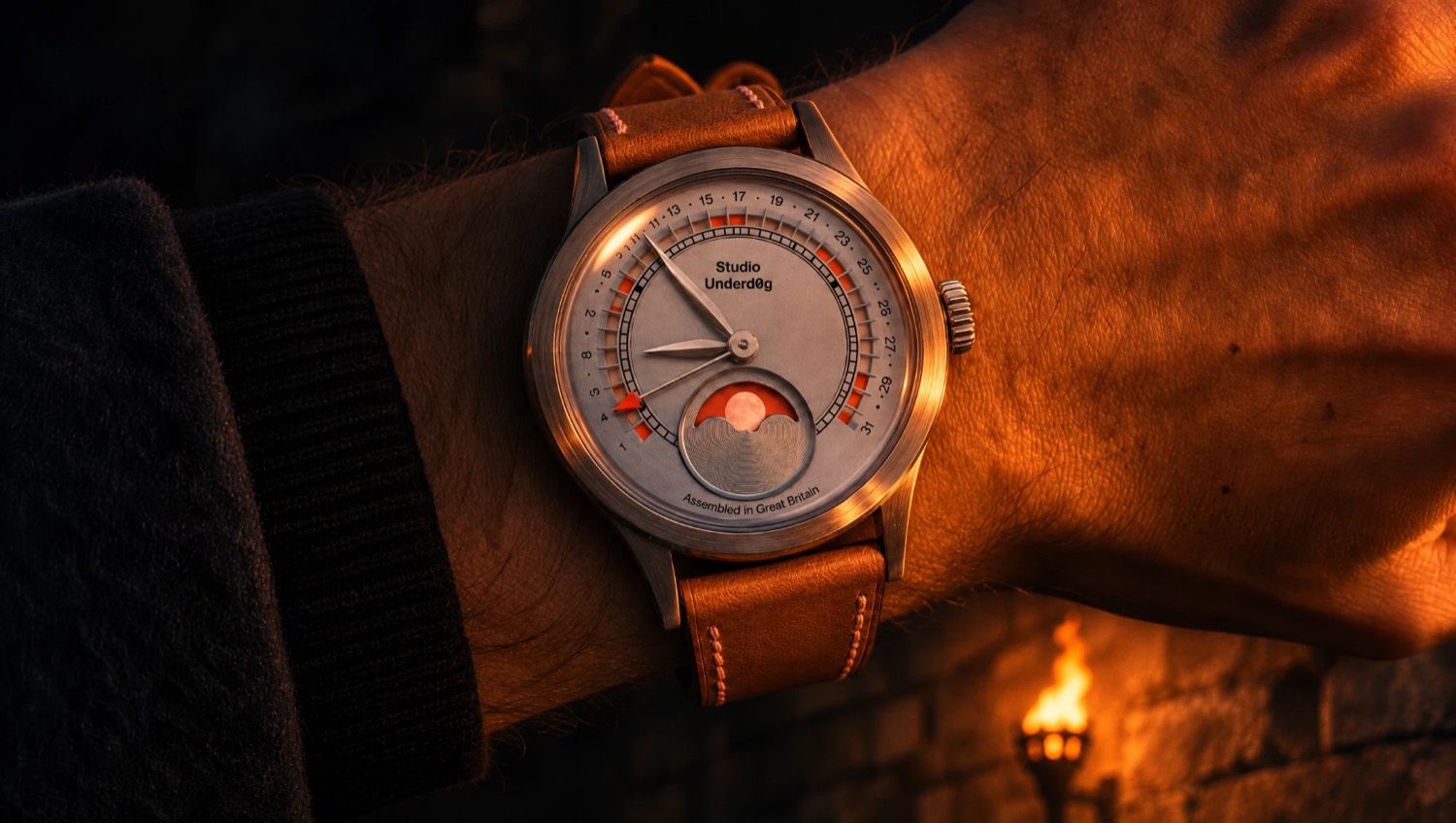
Look at how specific the moon instruction has to get. This is the W1 prompt — the difference between it and W2 is a sentence.
Photorealistic extreme close-up macro still, horizontal 16:9, at night in a dark study.

The first reference image is the master for the framing and the warm light. Keep its composition, its distance, its angle onto the wrist, the size of the watch in frame, its warm orange tungsten lamplight falling from the left and its dark out-of-focus background exactly as they are. One thing only changes, and it is the subject of this picture: where the moon sits in the moonphase window at six o'clock.

The second reference image is the master for the dial itself: a retrograde date arc of small numerals from 1 to 31 curving across the upper half with small red-orange trapezoid markers between them; "Studio Underd0g" in two short lines below twelve; "Assembled in Great Britain" in small type at six; two slim silver hands, an hour hand and a minute hand, which are the only hands this watch has; a brushed stainless steel case with a fluted onion crown at three o'clock; a tan leather strap with pale pink stitching.

The moonphase window. At six o'clock sits a circular sub-dial of silver guilloche with fine concentric rings, with a domed-top window cut into it. Along the bottom of that window are two rounded silver hills with a dip between them, outlined in a thin sky-blue line. The sky inside the window behind the hills is coral red.

The moon in this picture is just beginning to rise behind the left-hand hill. Exactly one sixth of a pale pink-cream disc is visible: its curved top edge rises above the slope of the left hill like the first arc of a sunrise, clearly visible against the coral-red sky, small and low and far over on the left side of the window. The remaining five sixths of the disc are hidden behind that left hill. The moon is definitely present and definitely visible, and it is definitely only just starting. The dip between the two hills, in the middle of the window, holds nothing but coral-red sky.

The hands read nine forty-two. The slender retrograde date pointer with the red-orange arrow tip sits low on the left of the date arc, below the nine o'clock position, angled down and outward, at eleven.

The watch face is turned square to the lens, the whole dial readable, the crystal clean with one soft warm highlight low across the glass and the centre of the dial completely clear.

Medium format look, fine organic film grain, the background thrown well out of focus.

Negative: an empty window, a window with no moon at all, a moon hidden completely behind a hill, a full moon, a complete circle, a half disc, a moon centred in the dip, a moon in the middle of the window, a moon over the right-hand hill, a moon floating high in the red sky, two moons, a red moon, an orange moon, a yellow moon, a white moon, cool blue light, moonlight, daylight, a seconds hand, a sweeping central seconds hand, three central hands, a date pointer at the top of the dial, a hard glare across the dial, fingers over the dial, a tilted or foreshortened dial, text other than the dial lines, watermark.
Photorealistic extreme close-up macro still, horizontal 16:9, at night inside a darkened aircraft cabin.

The first reference image is the master for the framing. Keep its composition, its distance, its angle onto the wrist, the size of the watch in frame and the position of the dial in frame exactly as they are. Only two things change: the light, and where the moon sits in the moonphase window.

The light: cool moonlight through a cabin window from the left at 6500 kelvin, a single clean source. The background is an almost black cabin interior thrown far out of focus, with one faint cold rim of light along the edge of frame. The tan leather strap reads cool and desaturated under this light; the steel case carries a thin cold highlight along its flank; the ice-blue dial reads colder and darker than in daylight but every element on it stays clearly readable.

The second reference image is the master for the dial. Render the watch face exactly as that reference has it: a pale ice-blue dial; a retrograde date arc of small numerals from 1 to 31 curving across the upper half with small red-orange trapezoid markers between them; a slender red-orange arrow-tipped pointer; "Studio Underd0g" in two short lines below twelve; "Assembled in Great Britain" in small type at six; two slim silver hands and no seconds hand; a round brushed stainless steel case with a fluted onion crown at three o'clock; and a tan leather strap with pale pink stitching.

The moonphase is the subject of this picture. At six o'clock sits a circular sub-dial of silver guilloche with fine concentric rings. A window with a domed top is cut into it. Along the bottom edge of that window are two rounded silver hills with a dip between them, outlined in a thin sky-blue line. Behind the hills the sky inside the window is coral red.

In that window the moon has climbed partway and is still well over to the left. About one third of a pale pink-cream disc shows above the slope of the left-hand hill, its curved upper edge fully clear of the hill and the rest of the disc still hidden behind it. It sits on the left side of the window, part way up, climbing toward the dip but a long way from it. The dip between the two hills is empty coral-red sky with nothing in it. It is unmistakably on its way and unmistakably not there yet.

The hands read eleven oh eight. The slender retrograde date pointer with the red-orange arrow tip sits low on the left of the date arc, below the nine o'clock position, angled down and outward, at twelve. It is a date pointer, not a seconds hand, and this watch has no seconds hand.

The watch face is turned square to the lens, the whole dial readable, the crystal clean with one soft cool highlight low across the glass and the centre of the dial completely clear.

Medium format look, fine organic film grain, the background thrown well out of focus.

Negative: a full moon, a complete circle, a moon centred in the dip, a moon in the middle of the window, a moon over the right-hand hill, a moon high in the red sky, a thin crescent sliver, a moon entirely hidden, two moons, an empty window, a red moon, an orange moon, a yellow moon, a white moon, warm tungsten light, daylight, a seconds hand, a sweeping central seconds hand, three central hands, a date pointer at the top of the dial, a date pointer pointing upward, a hard glare across the dial, fingers over the dial, a tilted or foreshortened dial, a lit cabin, visible seats, text other than the dial lines, watermark.
10
The end card
Three seconds. A generated product plate with half the frame deliberately left empty, and the brand's real vector wordmark set into that empty half by hand.
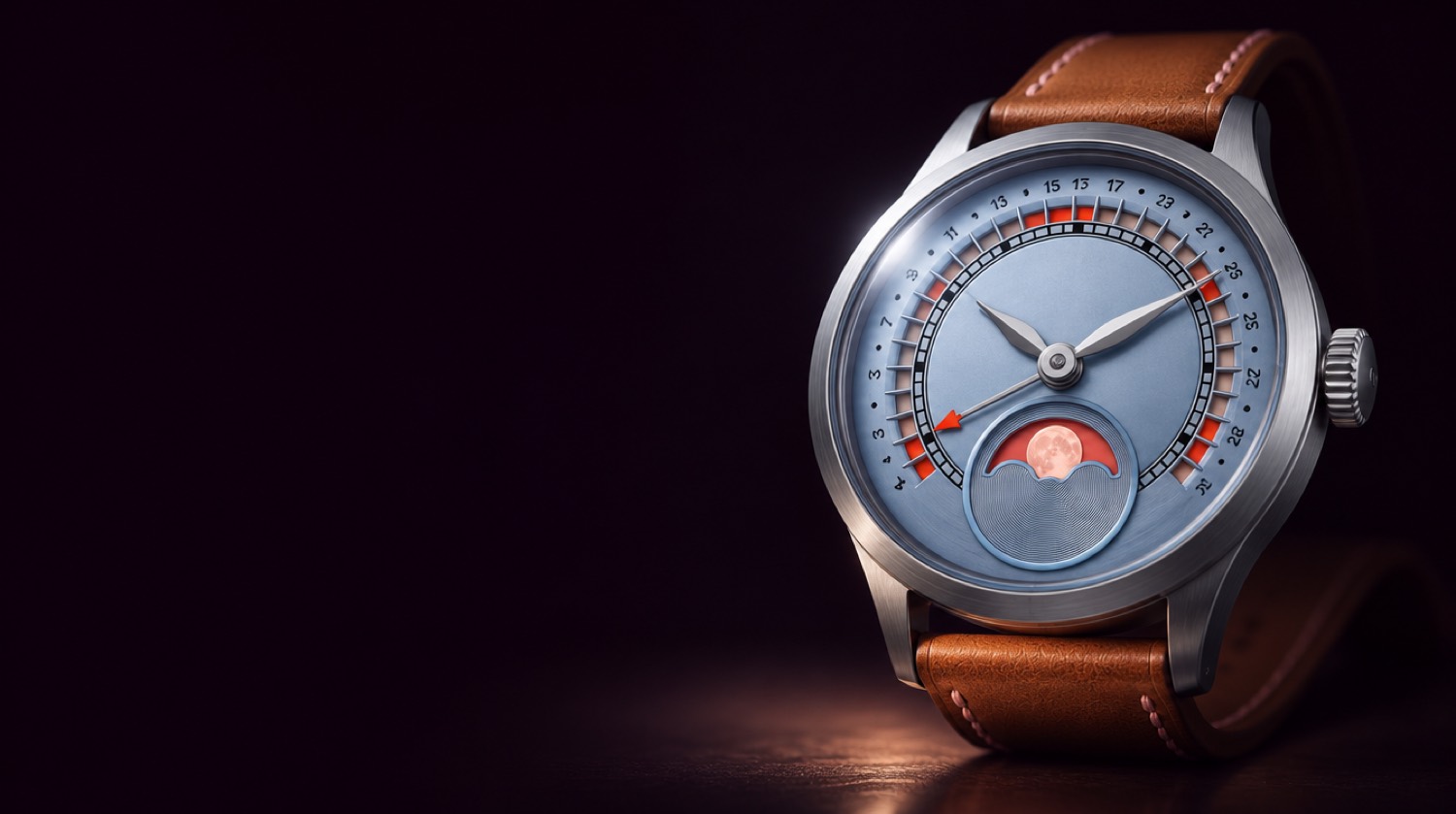
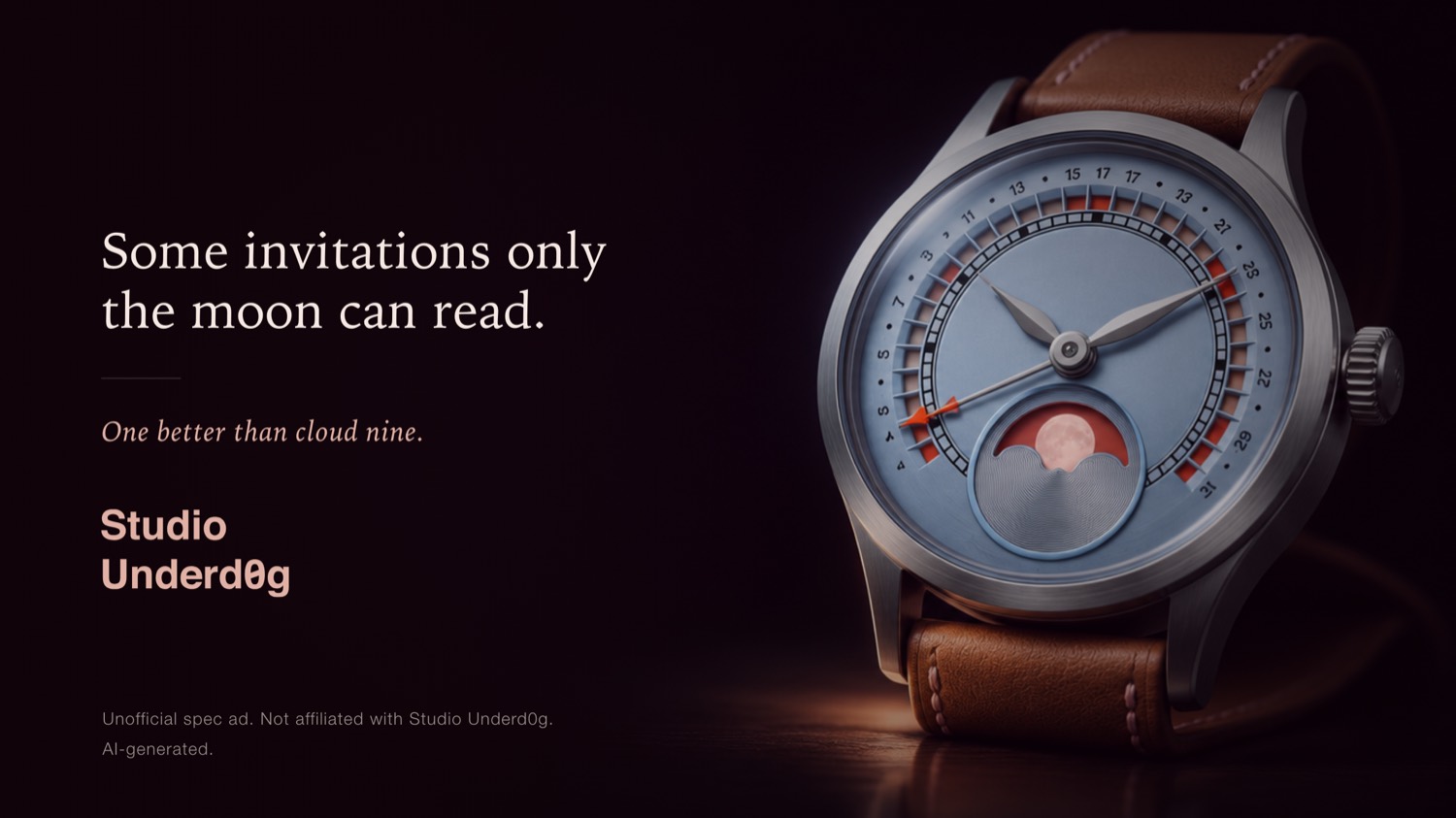
A luxury advertising still, horizontal 16:9, photographed at night. There is no text anywhere in this image.

The composition is deliberately lopsided. The entire left half of the frame is empty: a deep plum-black field, almost but not quite black, falling away into shadow, with nothing in it at all. Type will be placed there later, so it stays clean, dark and uncluttered.

The right half holds the watch. It rests on a dark polished surface, three-quarter view, tilted toward the lens so the dial is fully readable, the case catching one long soft highlight down its flank. It sits in the right third of the frame, large and confident, with the strap curling away into shadow at the bottom right corner.

The second reference image is the master for the watch and its dial: a pale ice-blue dial; a retrograde date arc of small numerals curving across the upper half with small red-orange trapezoid markers between them; a slender red-orange arrow-tipped pointer low on the left of that arc; two slim silver hands, an hour hand and a minute hand, which are the only hands this watch has; at six o'clock a circular sub-dial of silver guilloche with a domed window cut into it, two rounded silver hills along the bottom of that window outlined in thin sky-blue, a coral-red sky behind them, and a complete pale pink-cream moon sitting whole and centred in the dip between the hills; a round brushed stainless steel case with a fluted onion crown at three o'clock; a tan leather strap with pale pink stitching.

The light is a single cool moonlight source from the upper left at 5200 kelvin, grazing the crystal and the steel, with one small warm bounce low on the strap. Everything beyond the watch falls to deep plum shadow. A faint pool of warm light lies on the surface beneath the watch and fades within a hand's width.

Medium format look, fine organic film grain, shallow depth of field, the background completely out of focus and almost entirely dark.

Negative: any text, any letters, any numbers outside the dial itself, a logo, a wordmark, a caption, a watermark, a signature, a second watch, a hand, a wrist, a person, a bright background, a white background, a busy background, props, flowers, boxes, a cluttered left side, anything placed in the left half of the frame, a centred composition, a crescent moon on the dial, an empty moonphase window, a seconds hand, three central hands.
If a frame is type on a flat ground, set the type yourself. Generate the ground, not the letters.
11
What I'd tell someone starting tomorrow
- Say the whole story out loud first, and make the model play it back to you. Dialogue, beats, what is on screen at each second. Fix it in words while fixing is free.
- Make the character sheet once and never regenerate it. The same file, every run. A “similar” portrait is a different person.
- One plate per shot, and tell the prompt the plate is law. Name the objects and say they stay where the picture puts them.
- Draft everything at 480p. It is the cheapest thing on the platform and it tells you everything. I only upscaled once a shot was going in the cut.
- Write exclusions against real failures, not imagined ones. “No slow motion, no catwalk, he never looks into the lens” only existed because two drafts did exactly that.
- Anything with readable type is a still, not a shot. The card and the end card both took minutes.